



100 Years Since the Scopes Trial: Remembering a Cultural Clash
July 2025 marks the 100-year anniversary of the infamous Scopes “Monkey” Trial—one of the most pivotal and public legal showdowns over the role of biblical creation versus evolutionary theory in American public education. Held in the sweltering summer of 1925 in Dayton, Tennessee, this trial wasn’t just about a biology teacher and a banned textbook. It was about worldviews—two fundamentally different accounts of origins and authority—and that cultural clash is still echoing today.
The Trial That Shaped the Debate
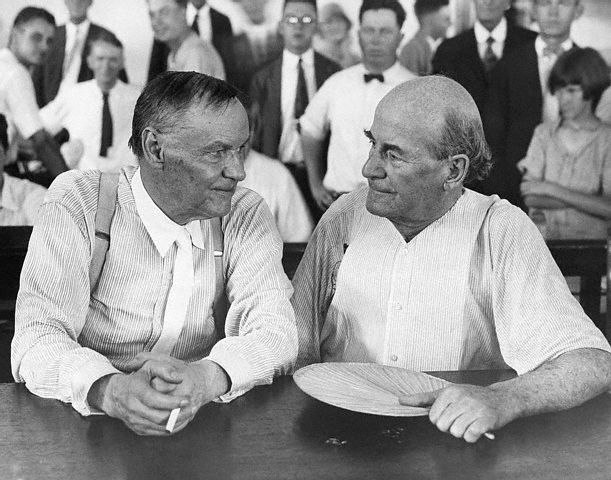
John T. Scopes, a young high school teacher, was charged with violating Tennessee’s Butler Act, which prohibited the teaching of human evolution in state-funded schools. The trial quickly became a national spectacle, drawing some of the most prominent figures of the day—William Jennings Bryan, a staunch Christian statesman, arguing for the prosecution, and Clarence Darrow, a fiery agnostic and civil liberties lawyer, defending Scopes.
What played out in the courtroom was more theater than trial. Reporters from around the country poured into the tiny town of Dayton. Journalists broadcast the trial live via radio—the first in American history to do so. The courtroom turned into a philosophical battleground. And although Scopes was ultimately found guilty and fined $100, it was clear this case had stirred something far deeper than just legal arguments.
A Turning Point for Creation and Culture
To many, the Scopes Trial seemed like a cultural loss for the biblical creation position. The media painted Bryan as outdated and outgunned, and the textbook defenders of evolution as champions of progress and enlightenment. But the real outcome was far more nuanced—and long-lasting.
In the short term, anti-evolution laws persisted in several states. But over time, the trial helped galvanize a new wave of Christian thought. Many believers—realizing the culture was shifting dramatically—began organizing, writing, and educating with renewed urgency. In the decades that followed, the seeds of modern creation ministries were planted, eventually leading to the formation of groups like the Institute for Creation Research (ICR), Answers in Genesis (AiG), and others.
The trial also awakened the church to the reality that science was no longer neutral ground. It became a battleground of worldviews—biblical authority versus naturalistic humanism. And that realization sparked a movement: one that would grow to include creation museums, Christian schools, homeschool curricula, and global apologetics efforts focused on Genesis as the foundation for truth.
The Legacy Lives On
A century later, the same questions that loomed large in 1925 are still at the heart of cultural conflict:
Where did we come from? Who decides truth? Can God’s Word be trusted from the very first verse?
Though courtrooms have changed and some cultural views have shifted, the Scopes Trial remains a turning point—a warning, a wake-up call, and, ultimately, a catalyst. For biblical creationists today, it’s not just a matter of remembering history. It’s a reminder to keep contending for truth, to teach with clarity, and to proclaim boldly that science and Scripture are not at odds—when both are rightly understood, they affirm the Creator behind it all.
One hundred years on, the Scopes Trial is still doing what it did then—challenging us to stand, speak, and show the world that God’s Word is trustworthy… from the very beginning.