



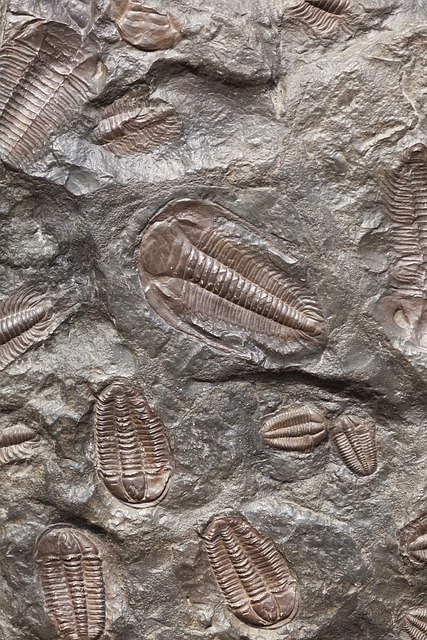
Preserved
Crinoid The foundation rock of our earth (granitic in nature) floats on the mantle beneath it and is covered in layers of sedimentary rocks (sandstones, limestones, shales, etc.). These sedimentary layers range in thickness. For example, the layers exposed in Grand Canyon are over a mile thick while the sedimentary layers of Minnesota have been scraped clean (pushed predominantly to the south and west by the glaciers of the post flood ice age) exposing the foundation rock below. In many wet and humid climates, these layers of sedimentary rocks
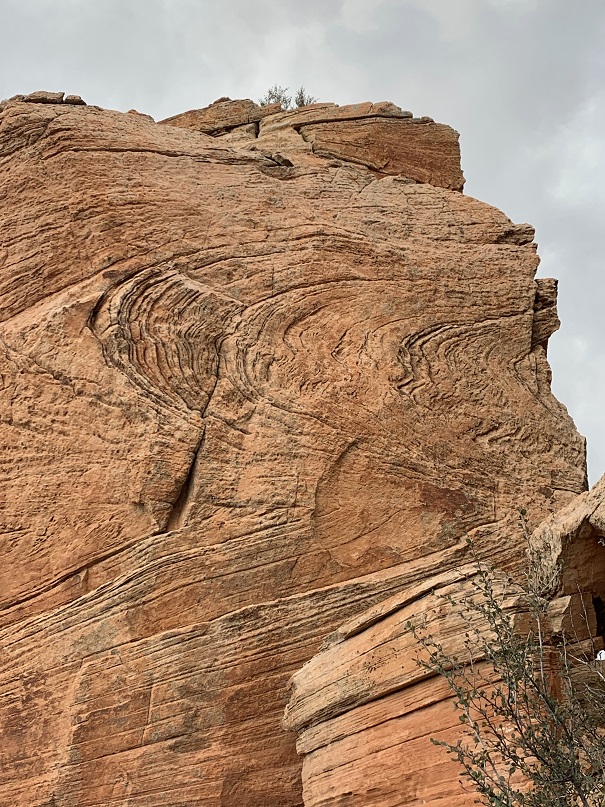
Bending and Believing
Kathleen and I had the privilege of hiking in Sedona with Guy Forsythe on December 17. Guy is the founder of Crying Rocks Ministry in Sedona. Please take the time to check out his website at www.cryingrocks.org. Guy was gracious enough to take some time and show us the folding in the Coconino sandstone found around Sedona. This is the same Coconino sandstone that is the third layer in the Grand Canyon. This particular sandstone has been the focus of conflict in regards to its origin. The evolutionist

Don’t Forget What He Said
Much of modern science works under the principle that today's geological processes are the key to understanding geological history. Today's rates of erosion, decay, and material deposition (among others) are used to extrapolate back and determine the length of time it took to reach the current geologic condition of the earth. Although that may appear logical, there are geological problems that require the idea to be discarded. The following are only five examples of geological features we see today that no modern process can explain. 1. The Grand Canyon