



The Fossils Have an Order
Part 3 of our series examining where biblical creation and conventional geology agree on the evidence, where the interpretation begins to differ, and why.
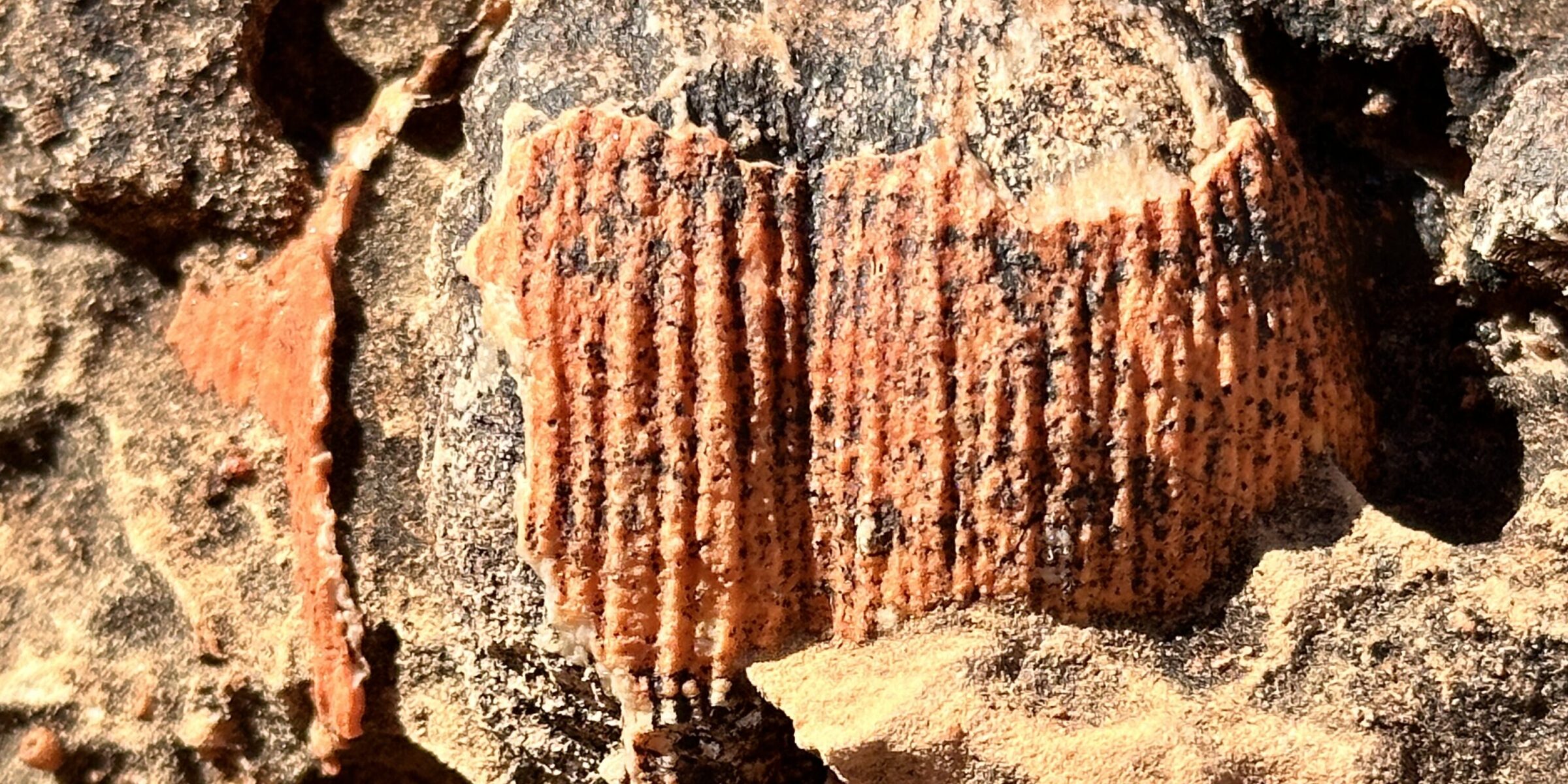
Fossils are some of the clearest reminders that the rocks of the Grand Canyon record a history of life, death, burial, and preservation. Yet a fossil does not necessarily tell us where an organism originally lived. It tells us where that organism, or its remains, was finally deposited and buried. Sediment can be transported great distances, and organisms can be carried with it before being left behind. Once we begin tracing fossils through the canyon’s rock layers, however, another feature becomes obvious. They are not scattered randomly through the sequence.
Trilobites and other marine invertebrates are abundant in the lower Paleozoic section, but they are not confined to the lowest part of the sequence. Marine invertebrates continue to occur higher in the canyon walls, often in different fossil assemblages. Tracks, trails, and burrows preserve evidence of animal activity within the sediment, while still other fossils become prominent in rock units above the canyon itself. Geologists have recognized this ordering for generations, and it forms an important part of how the rock record is described and compared.
The fossil record has an order.
Biblical creation does not require us to deny that order. The more useful question is what kind of history produced it.
The Fossil Record Has a Pattern

When geologists compare sedimentary layers from one place to another, they notice that certain fossil groups repeatedly occur in particular portions of the rock sequence. That recurring pattern is commonly called faunal succession. In simple terms, different kinds of fossils tend to appear in a recognizable order through the stratigraphic record.
That order is something we can observe. Similar fossil assemblages may occur in comparable rock units across broad regions, and those similarities can help geologists describe and compare the layers themselves. From a biblical creation perspective, there is nothing objectionable about recognizing the pattern. The problem comes when the pattern is treated as though it automatically establishes the conventional ages and evolutionary history assigned to those rocks.
Biblical creation recognizes fossil succession without accepting that it represents hundreds of millions of years of evolutionary history. The order is evidence. The history used to explain that order is an interpretation of the evidence.
How Conventional Geology Interprets the Pattern
Conventional geology places fossil succession within a deep-time evolutionary framework. Different fossil groups are associated with different portions of the standard geologic column, and those recurring assemblages are then used to correlate rock units and place them within the conventional timescale. In that system, organisms appear, diversify, persist for varying intervals, and disappear through long spans of geological time.
It is important to understand the system accurately without confusing the system with the evidence itself. The fossils occur in an order. The assigned ages, evolutionary relationships, and long chronology are the historical framework used to explain that order. Those are not the same thing.
The Cambrian provides a good example. Conventional paleontology does not claim that life began in the Cambrian, and some minor fossils do occur in Precambrian rocks. What the Cambrian does preserve is a dramatic increase in the abundance and diversity of animal fossils, including representatives of many major animal groups. This pattern is commonly called the Cambrian Explosion. Conventional geology interprets it within an evolutionary history of deep time. Biblical creation sees the same physical pattern but places it within a very different history.
The Cambrian Record at the Grand Canyon
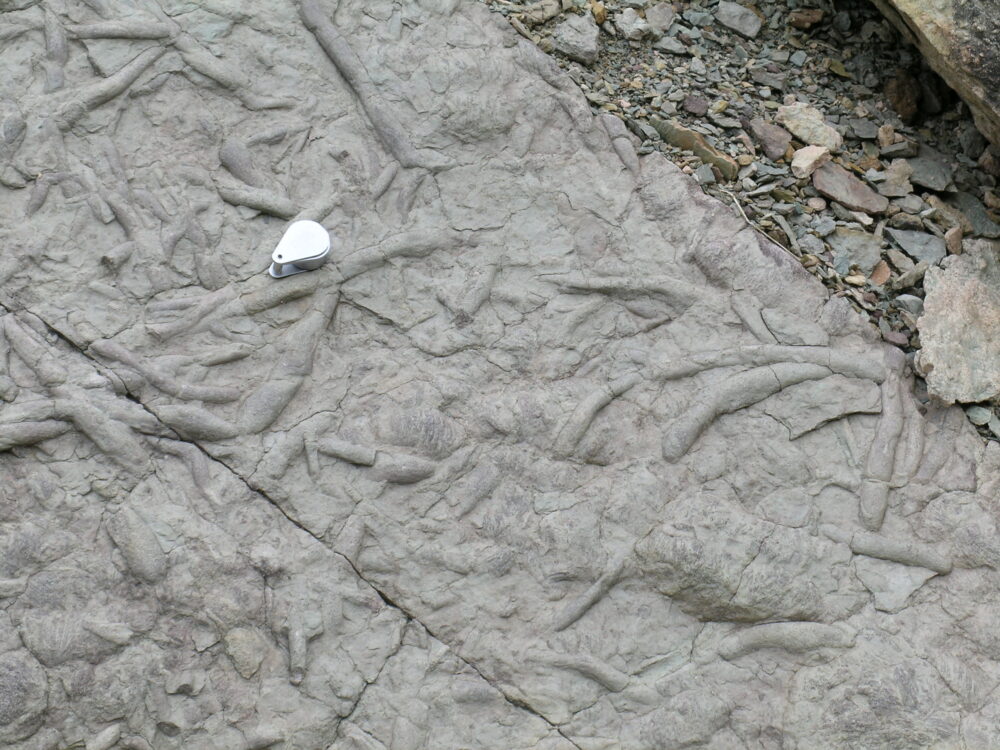
At the Grand Canyon, Cambrian rocks in the Tonto Group contain trilobites, brachiopods, other arthropods, and abundant trace fossils. The pattern is not something we need to minimize or explain away. It is part of the geology in front of us. The real question is what event, or sequence of events, best explains how these organisms came to be buried and preserved within these layers.
From a biblical creation perspective, the Cambrian transition is understood within the history Scripture gives us and in light of the physical evidence preserved in the rocks. We are not looking at life suddenly coming into existence. We are looking at the beginning of the major fossil-bearing record as the Flood began to bury living communities on a massive scale. An ordered fossil record can arise within a Flood framework through a combination of ecological zonation, mobility, transport, hydrodynamic sorting, and changing depositional conditions rather than through one universal mechanism.
The phrase “Cambrian Explosion” is therefore useful as a conventional label for the observed pattern, but the biblical creation interpretation is quite different. Rather than an explosion of newly evolved life, we see a sudden and widespread record of death, burial, and preservation.
The Bright Angel Formation brings that contrast into focus. It contains trilobites, brachiopods, burrows, tracks, and trails, along with other evidence of marine organisms and their activity. We have discussed some of these discoveries previously in our article on Cambrian fossils in the Bright Angel Formation. The fossils themselves are not the point of disagreement. Their order is not the point of disagreement. The disagreement is over the history that best explains how they came to be there.
Order Does Not Automatically Mean Ancestry
Once we separate the observed pattern from the history used to explain it, another issue becomes easier to see. Fossil succession tells us that different organisms occur in different portions of the stratigraphic record. By itself, however, that observation does not tell us why they occur in that order.
There is a difference between saying, “These fossils occur lower in the sequence than those fossils,” and saying, “These organisms therefore lived millions of years earlier and were evolutionary ancestors of the organisms above them.” The first statement describes a stratigraphic relationship. The second places that relationship inside a particular history of life.
A sequence is something to explain. It is not, by itself, the explanation.
Within conventional paleontology, fossil order is interpreted inside a broader evolutionary framework. Our point here is narrower. The stratigraphic position of a fossil does not, by itself, demonstrate ancestry or millions of years. It tells us where that fossil occurs in the sequence, while the history assigned to that sequence comes from the model used to interpret it. Biblical creation begins with the history given in Scripture and then asks whether the geology we observe is consistent with that history. In the case of the fossil record, a global catastrophe that progressively destroys, transports, buries, and preserves different communities provides a very different explanation for the same ordered sequence.
Why a Global Flood Can Produce Order
One common misunderstanding imagines the Flood as though the entire earth were stirred into one enormous slurry and then dumped out all at once. That picture bears little resemblance either to the months-long catastrophe described in Genesis or to the geological processes a global Flood would involve.
The Flood unfolded through time. Waters rose and spread across the continents. Sediment was eroded, transported, and redeposited. Currents changed in direction and strength. Tectonic activity altered basins and landscapes. Different environments were overwhelmed at different stages, while organisms varied greatly in habitat, mobility, size, shape, density, and likelihood of preservation.
A catastrophe that progresses through time and across geography can produce a sequence.
Several processes can contribute to that order. Ecological zonation is one part of the picture because organisms occupy different environments. Seafloor communities are not distributed in the same places as upland terrestrial animals. Geographic distribution also contributes because not every organism lived everywhere. Differences in mobility could affect how long some animals escaped burial. Water movement can sort objects according to size, shape, and density. Burial and preservation can also vary dramatically with sediment supply, chemistry, oxygen, scavenging, and the speed at which organisms are covered.
No single one of these processes explains every fossil in every formation. Nor should we expect it to. The Flood was a complex, changing catastrophe. A sound Flood model must account for the interaction of ecology, geography, transport, behavior, burial, preservation, tectonics, and changing depositional conditions throughout the event.
Reading the Sequence at the Grand Canyon
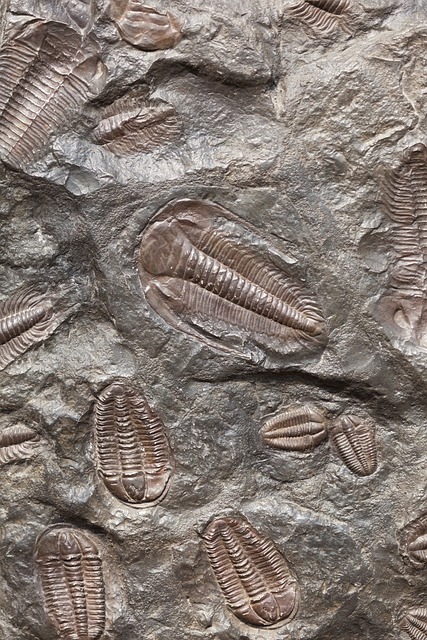
The Grand Canyon gives us an unusually clear place to work through these ideas because so much of the sedimentary sequence is exposed in the canyon walls. In the lower Paleozoic rocks, marine fossils dominate. The Bright Angel and Muav Formations preserve trilobites, brachiopods, and other marine organisms. Higher in the sequence, the Redwall Limestone contains a different and abundant marine fossil assemblage, including brachiopods, corals, bryozoans, crinoids, mollusks, and other organisms. Still higher units preserve additional marine fossils, plant material, and trace fossils.
Even the traces deserve attention. Tracks, trails, and burrows are not dead bodies. Some preserve organisms crawling across or through recently deposited mud before the next layer covered them. Others appear to record attempts to escape rapid burial, with animals moving upward through newly deposited sediment. In ichnology these are known as fugichnia, or escape structures, which are burrows produced when an organism attempts to uncover itself after being buried by an influx of sediment. In some places trace fossils preserve activity without preserving the animal itself at the same location. This reminds us that the fossil record is not simply a vertical stack of dead creatures. It preserves evidence of movement, transport, burial, changing environments, and changing depositional conditions.
Our earlier article on fossil evidence of the global Flood in the Grand Canyon looks more closely at rapid burial and preservation. Here, the larger point is that the fossils occur in real patterns, and any historical model must account for those patterns. Biblical creation is not strengthened by ignoring difficult details. It is strengthened when the history given in Scripture and the physical evidence in the rocks are considered together and when our geological explanations are required to account for both.
What About Extinction and Disappearance?
The upper and lower limits of fossils in the rock record raise another important question. Some organisms appear in one portion of the sequence and are not found above it. Conventional geology commonly interprets those last appearances as extinction through time, sometimes in connection with major extinction events.
Within a Flood framework, however, a last fossil appearance does not automatically mark the moment an organism became globally extinct. It may instead record the last point at which a particular population was buried and preserved in that sedimentary sequence. Surviving members of a group could have lived elsewhere without leaving a fossil record above that level, while the observed boundary may reflect ecological destruction, changing geography, transport, or preservation rather than extinction at that exact horizon.
None of this makes the fossil boundary disappear. It simply keeps us from asking the fossil to tell us more than it actually can. The last fossil occurrence of an organism and the actual last living member of that organism are not necessarily the same event.
The Fossils Have an Order
By the time we step back and look at the whole sequence, the basic observation is straightforward. Fossils are not randomly distributed through the rocks. Different formations contain different assemblages, and those patterns can be recognized across large areas. Biblical creation does not need to flatten that pattern, deny it, or force every fossil into one simple sorting mechanism.
The disagreement is over the history behind the order. Conventional geology interprets the sequence primarily as a record of changing life through deep time. Biblical creation understands much of it as a record of communities progressively overwhelmed, transported, buried, and preserved during the global Flood. We are looking at the same fossils in the same rocks, but we are not starting from the same history.
For Canyon Ministries, Scripture gives us the reliable historical framework, while the rocks and fossils give us the physical record we are seeking to understand. We do not need to choose between taking God’s Word seriously and taking the geology seriously. We should do both, expecting that careful study of creation will be consistent with the history its Creator has revealed.
In the next article, we will bring the pieces of this series together. The layers are real. The geological names are useful. The fossils have an order. The larger question is how the same rocks and fossils can be understood within very different histories.
Good geology should never require us to ignore the evidence in front of us. It should drive us to look more closely at it. That is exactly what we intend to keep doing.