

Hidden Life in Grand Canyon
Bill Barrick – September 15, 2026
Cryptobiotic soil forms dry desert areas like the Colorado Plateau, the Sonoran Desert, the Great Basin, and the inner Columbia Basin. Cryptobiotic means “hidden-life.” This top soil layer is composed of cyanobacteria, lichens, mosses, green algae, and microfungi. These living organisms jointly form a hard black crust enabling the soil to resist erosion, absorb rainfall, and provide nutrients and ground stability for neighboring plants. Over 70% of ground in the Southwestern United States is covered by this crust. Its depth can be 1–15 centimeters. Crusts in the upper range of this depth might be thousands of years old.
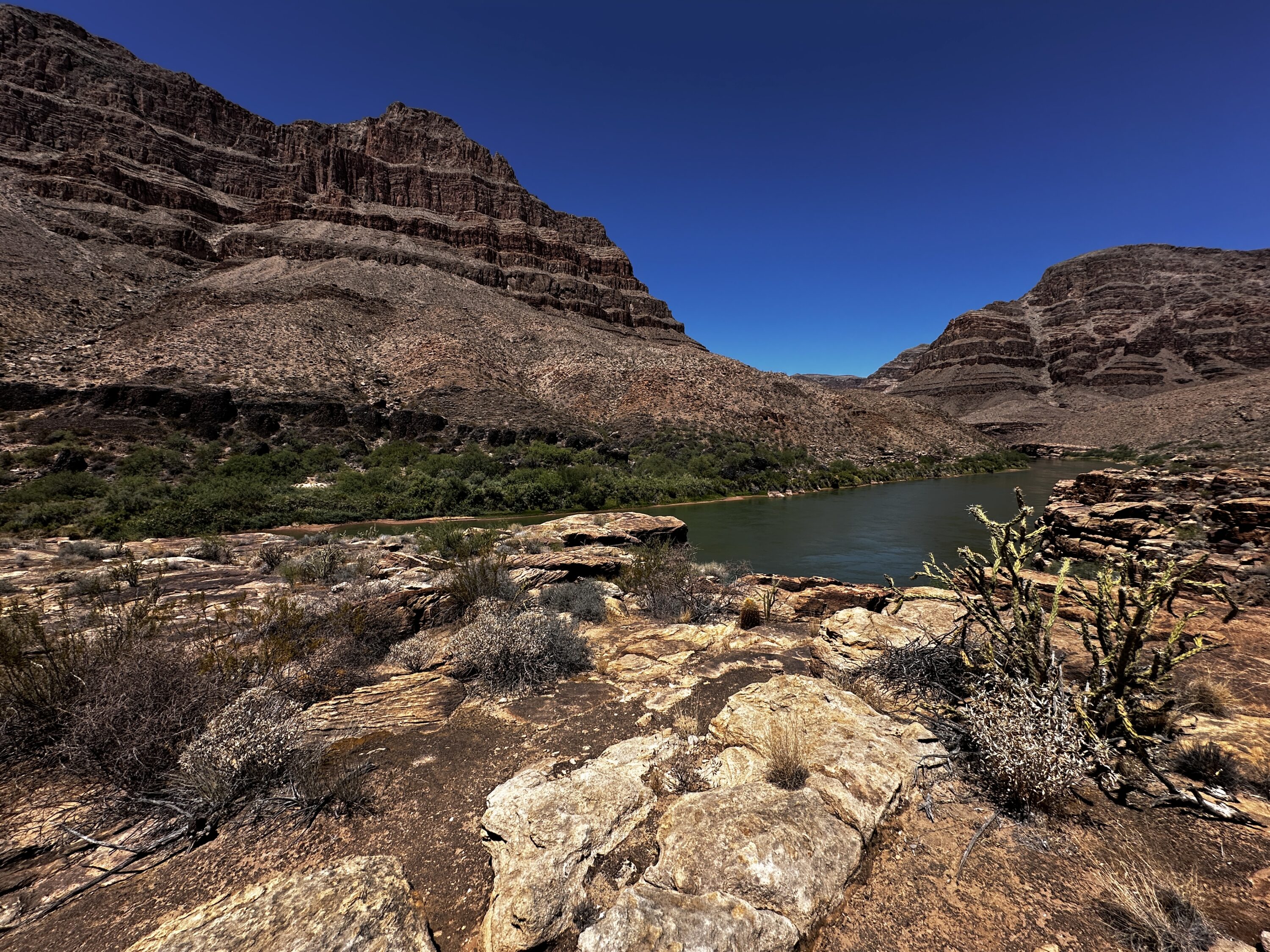
The oldest constituent of cryptobiotic soil is cyanobacteria which consist of the founding organisms colonizing bare sand or soil. They are the “glue” binding particles of soil together in a mat of living organisms. Cyanobacteria live mainly in water and grow in colonies large enough to be seen as massive blue-green accumulations visible from the International Space Station. These bacteria also make their appearance in the oldest fossils on the planet, stromatolites. To form stromatolites, the bacteria trapped sediments in the microbial communities, binding them into limestone domes. Stromatolites can be seen in several locations in the Grand Canyon, including the Bass Formation at Unkar Delta around river mile 72. These are pre-Flood fossils buried in place by Flood sediments. Therefore, we find them in Precambrian rock strata. Present-day living stromatolites can be seen in Shark Bay’s Hamelin Pool on the central coast of Western Australia.
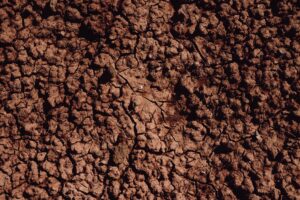
When we abandon established trails to walk across the desert crust known as cryptobiotic soil, we invade and destroy it. We can compare our invasive movement to stabbing, ripping, and scraping the skin off our bodies. Our skin protects us from infections, holds our body together, and helps it retain life-preserving moisture. During our walks in the Grand Canyon, we must intentionally protect the cryptobiotic crust just as we purposefully protect our own skin. We protect our skin and our bodies by using clothing and sunscreen. When we fail to take those precautions, we expose ourselves to harmful results like dehydration, sunburn, heat stroke, and skin cancer. If we fail to care for the earth’s “skin” in desert areas, we expose the soil to equally harmful effects like erosion, dehydration, and soil degradation. This can lead to plant disease and plant death as well as animal starvation and displacement.
Three Springs at river mile 216 offers an excellent place to encounter cryptobiotic soil in the Grand Canyon. The flow of three separate springs feeds into one creek in this side canyon. Plants along the trail represent a variety of species from the Mojave, Sonoran, and Great Basin deserts. Metates and pictographs testify to the fact that native Americans made the canyon their home. Many of those plants depend upon the cryptobiotic soil to preserve their environment and its nutrients.
As Christians, we also have a highly protective “hidden-life” provided by our Creator. In Colossians 3:3 the apostle Paul writes, “for you have died and your life [tsōē] is hidden [kruptō] with Christ in God.” The word for “life” in this verse is not bios like in cryptobiotic, but “hidden” is the same as crypto. Spiritually, our protection is in Christ where our life is hidden from all the damage sin, the world system, and Satan might cause. Bios does occur in another of Paul’s epistles when he writes to Timothy, “in order that we might live a tranquil and quiet life [bios] in all godliness and dignity” (1 Timothy 2:2). Another apostle, Peter, describes that same life as “the hidden [kruptos] man of the heart with the imperishable quality of a humble and quiet spirit which is precious before God” (1 Peter 3:4). The word quiet is the same in both 1 Timothy 2:2 and 1 Peter 3:4.
Let’s devote ourselves to living out daily the hidden life we have in Christ. And, let’s humbly allow the hidden-life desert soil to experience the quietness of an uninvaded environment to prevent that desert life from perishing.
