



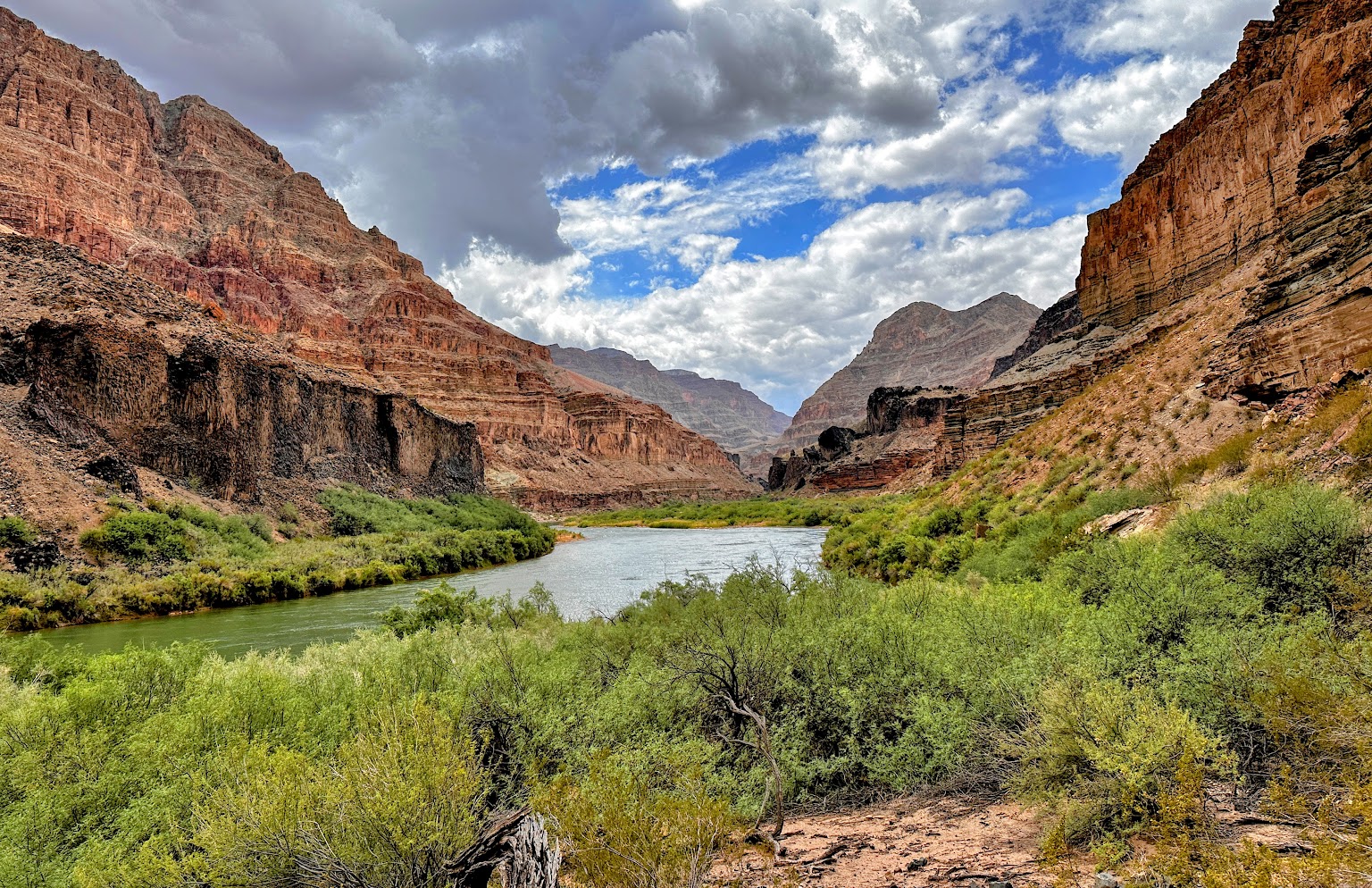
From Rim to River: Grand Canyon’s Vertical Habitats
From rim to river, the canyon is a living reminder that God is not only powerful enough to create. He is faithful enough to provide.
Stand at the South Rim of the Grand Canyon on a cool morning and the landscape below can look almost lifeless. The cliffs are dry, the slopes are steep, and the river is barely visible as a narrow thread winding through rock nearly a mile below. From that distance, the canyon seems like a monument made almost entirely of stone.
Then you begin to descend, and the air grows warmer as the forest gradually thins. Ponderosa pines give way to pinyon and juniper, then to desert shrubs, cactus, agave, and open slopes of sun-baked rock. Far below, cottonwoods and willows gather along the Colorado River and its tributaries, while shaded side canyons shelter ferns, mosses, flowers, insects, and amphibians in places that seem worlds apart from the dry cliffs just beyond them.
The Grand Canyon is not one habitat. It is many.
A journey from the rim to the river carries a traveler through a remarkable stack of biological communities shaped by elevation, temperature, sunlight, water, slope exposure, and geology. In only a few miles, the landscape can change in ways that would normally require traveling hundreds of miles across the continent. The canyon is a vertical world of habitats.
Life Along an Elevation Staircase
The South Rim rises to roughly 7,000 feet above sea level, while the Colorado River flows thousands of feet below. That elevation difference produces major changes in temperature and moisture. The rim may be covered in snow while hikers near the river are wearing short sleeves, and summer temperatures along the inner canyon can rise well above those at the top. Rain and snow are more common at higher elevations, while the river corridor lies in a much hotter and drier environment.
 Those changes affect nearly everything that lives in the canyon. Higher elevations support forests of ponderosa pine, Gambel oak, pinyon, juniper, and other plants suited to cooler conditions. Mule deer, elk, squirrels, woodpeckers, jays, and many other Grand Canyon animals find food and shelter among the trees.
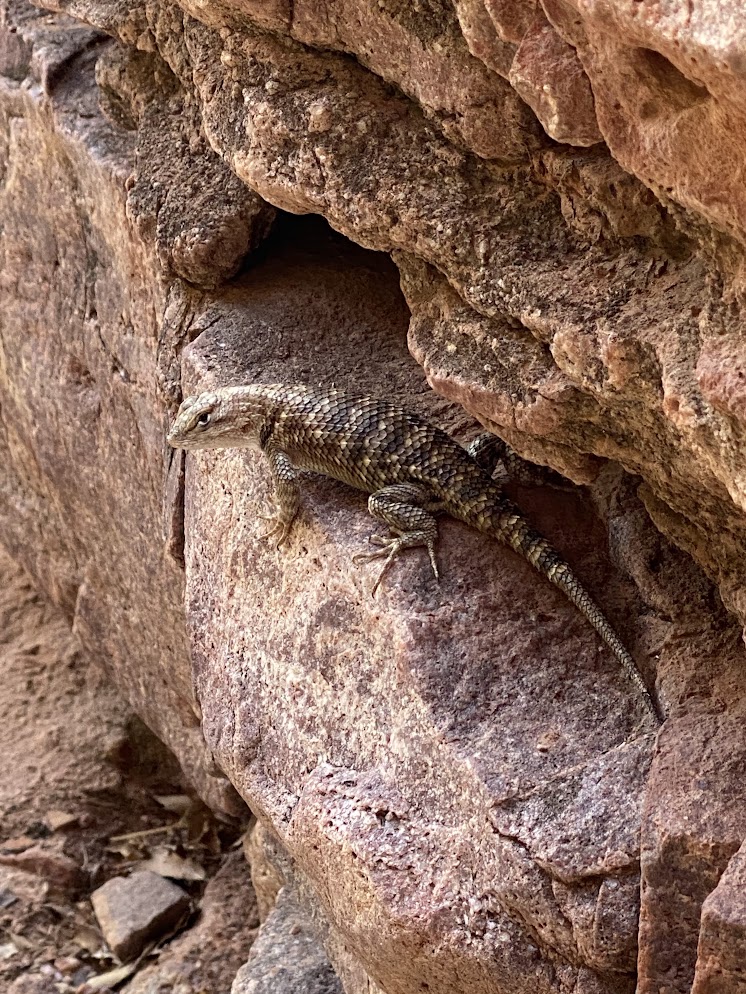
Lower down, the forest begins to open, and plants growing on the slopes must endure greater heat, less water, thinner soils, and intense sunlight. Yucca, agave, prickly pear, cholla, rabbitbrush, Mormon tea, and other desert plants become more common. Lizards bask on warm rocks, ravens ride rising air currents, and bighorn sheep move across cliffs and broken ledges that would stop most other large mammals.
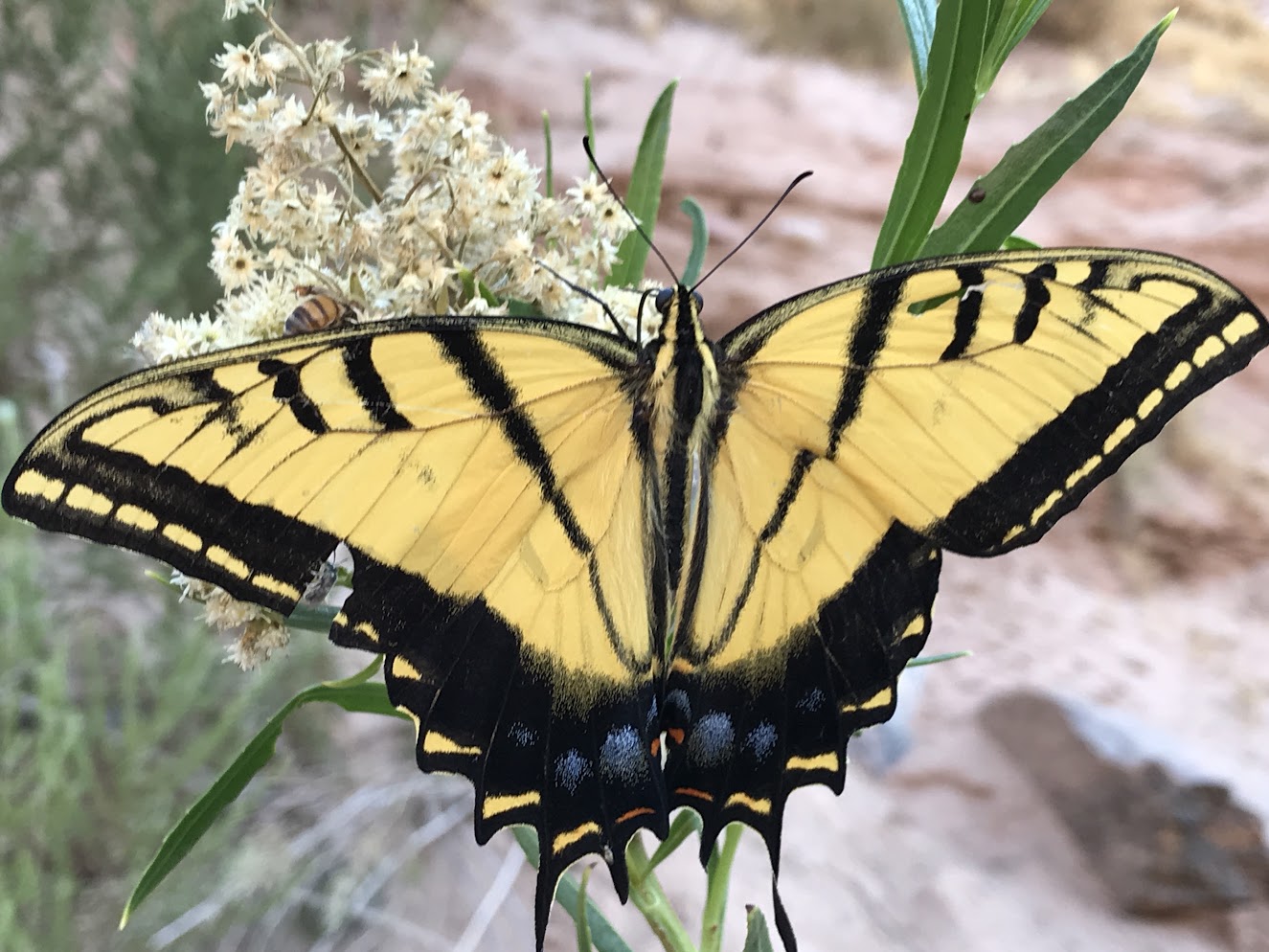
At the bottom of the canyon, the Colorado River changes the landscape again. Water creates a narrow corridor of life through the desert where willows, arrowweed, seep willow, and cottonwood seedlings grow near shorelines, springs, and tributaries. Insects gather around the vegetation, birds feed and nest nearby, mammals come to drink, and fish live in the current below.
The difference can be striking. A person can leave a cold forest in the morning and stand beside cactus and desert shrubs later that day. A raft trip may pass barren slopes, green riverbanks, shaded waterfalls, hanging gardens, sandy beaches, and narrow side canyons within only a few hours. Each location provides a different set of opportunities, and life fills them.
More Than Elevation
Elevation is one of the most obvious influences on Grand Canyon biology, but it is not the only one. The direction a slope faces can change how much sunlight it receives. South-facing slopes are often hotter and drier because they receive more direct sunlight, while north-facing slopes may remain cooler and hold moisture longer. A plant that struggles on one side of a canyon may thrive on the other.
Shade also matters. A narrow side canyon may remain cool long after the surrounding cliffs have heated in the sun. Deep alcoves can protect plants from intense light and reduce water loss, while cracks in the rock may collect moisture and springs can turn a seemingly barren wall into a ribbon of green.
Geology plays a role as well. Different rock layers weather into different kinds of slopes, ledges, cliffs, and soils. Some surfaces hold water more effectively than others. Some create broad platforms where plants can take root, while others form sheer cliffs that provide nesting or roosting sites for birds.
The canyon’s biology is connected to its structure. For a closer look at how that structure developed, see our overview of how the Grand Canyon was formed. Rock, water, sunlight, and elevation work together to shape where organisms can live. The plants and animals are not scattered randomly across the landscape. They occupy places where food, shelter, temperature, moisture, and protection come together. Sometimes that habitat may cover a broad section of the canyon, while at other times it may be no larger than a shaded crack in a wall.
Some of the most beautiful habitats in the Grand Canyon are also among the smallest. Springs and seeps emerge where groundwater reaches the surface, and in dry country, even a small amount of dependable water can transform the landscape.
Maidenhair ferns may grow from damp walls. Mosses spread across shaded rock. Monkeyflowers and columbines bloom near flowing water. Insects hover above pools, while frogs, toads, and other small animals may depend on these isolated pockets of moisture. Step only a few feet away, and the desert returns.
These places are miniature worlds. The contrast reminds us that living things often depend on very specific conditions, and a small change in water, temperature, shade, or chemistry can determine which organisms survive in a particular place.
The canyon is filled with these boundaries. Forest gives way to woodland, woodland gives way to desert, and dry slopes descend toward river vegetation. Sunlit walls meet cool alcoves, springs interrupt cliffs, and tributaries carry life into places that would otherwise remain dry. What appears from the rim to be one enormous landscape is actually a mosaic of habitats.
Creatures Fitted to Their Places
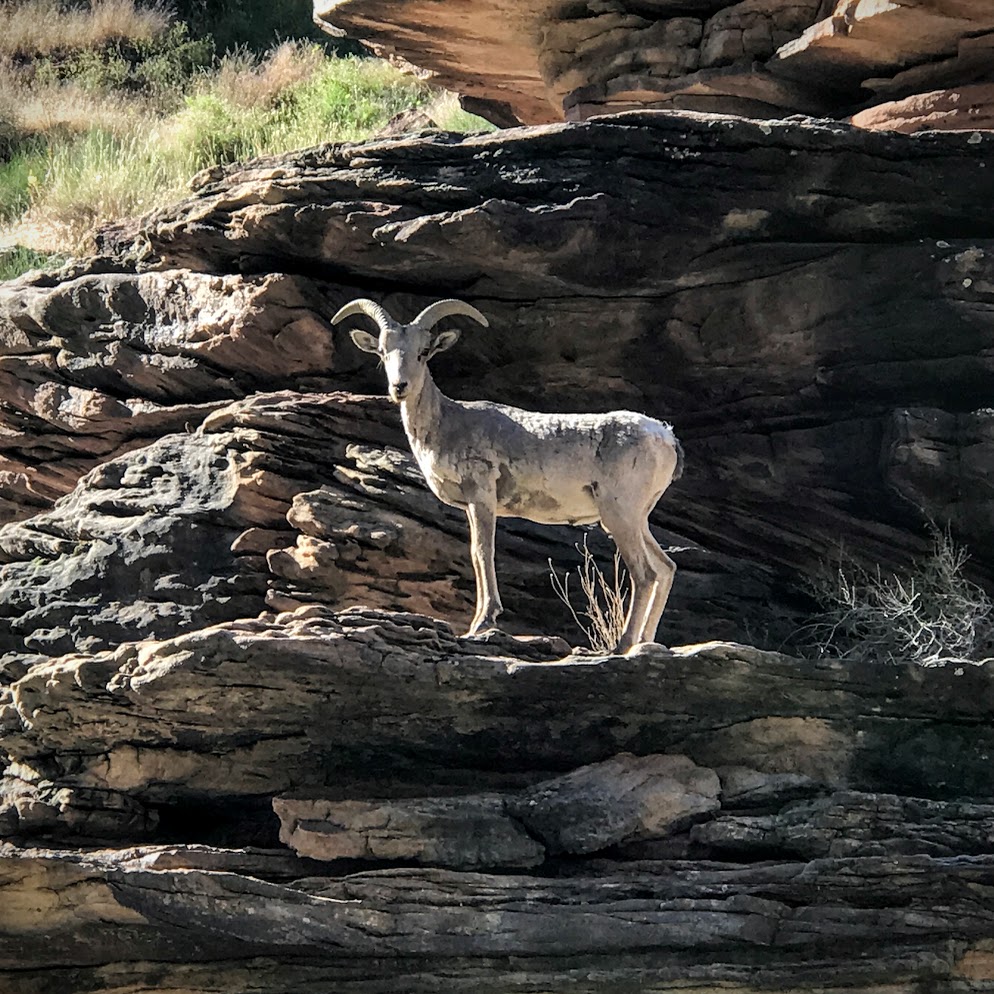 The organisms of the canyon do not merely endure these environments. Many possess features that allow them to use the landscape with remarkable effectiveness. Desert bighorn sheep have specialized hooves that provide traction on steep and rocky terrain, and their balance, strength, and awareness allow them to move across slopes that appear nearly vertical.
Cactus plants store water in thick tissue and reduce water loss through specialized surfaces and spines. Many desert plants spread roots close to the surface so they can quickly absorb moisture from brief rainfall. Reptiles regulate their body temperature by moving between sunlight and shade, birds use cliffs for nesting and rising air currents for flight, and bats emerge after sunset when temperatures are cooler and insects are active.
Fish in the Colorado River must live in strong currents and changing water conditions. Insects may spend part of their lives beneath the water before emerging into the air. Cottonwoods release seeds that depend on moist riverbanks and favorable timing. Each organism lives within limits, but those limits are not signs that life has failed. They are part of the way living systems function. A creature does not need to survive everywhere. It needs the traits necessary to live where it has been placed and where its descendants have spread.
The Bible presents life as the purposeful work of God. Genesis describes plants and animals reproducing according to their kinds, but this does not mean every member of a created kind must remain identical. Living things contain tremendous capacity for variation, and that variation allows populations to adjust to different environments.
As animals dispersed across the earth after the Flood, groups would have encountered various climates, foods, predators, diseases, landscapes, and sources of water. Some populations became isolated from others. Certain inherited traits became more common, while others became less common or disappeared. Over time, populations could become highly specialized for particular habitats.
This kind of adaptation is observable and expected within a biblical creation framework. It helps explain how related organisms can display significant differences while still remaining part of the same created kind. The habitats of the Grand Canyon offer a living picture of this process as animals occupy different elevations, plants grow in different soils and moisture conditions, isolated springs support communities distinct from the surrounding desert, and creatures spread into available environments and become fitted to the places where they live.
This is not the unlimited transformation of one kind of creature into another. It is variation, selection, dispersal, and adaptation operating within the biological boundaries God established.
The God Who Fills the Canyon
It is easy to look across the Grand Canyon and see only scale. The canyon is more than a mile deep in places, its cliffs stretch for hundreds of miles, and its rock layers record immense catastrophe. The landscape makes us feel small, but the Creator’s care is also visible in the details: a seed taking root beside a spring, a lizard slipping beneath a warm rock, a bighorn sheep finding footing on a narrow ledge, a cottonwood growing beside the river, or a bat moving through the dark above camp.
The God who made the canyon’s vast dimensions also fills its smallest spaces with life.
Psalm 104 describes a world in which springs give water to animals, birds nest among branches, plants provide food, and creatures depend upon God for their provision. The psalm does not present creation as independent or self-sustaining. It presents a world continually dependent upon its Maker.
That dependence is everywhere in the Grand Canyon. The forest depends on moisture, the desert waits for rain, the river corridor depends on flowing water, and animals depend on plants, prey, shelter, and one another. Every habitat exists within boundaries that could not sustain life without the right combination of conditions.
From rim to river, the canyon is a living reminder that God is not only powerful enough to create. He is faithful enough to provide.
The next time you stand at the rim, look beyond the rocks. If you are deciding how to experience these different environments firsthand, see our guide on how to see the Grand Canyon. Look for the forests above, the desert below, the green ribbon of the river, and the hidden springs tucked into the walls. The canyon is alive, and everywhere life appears, the wisdom of its Creator is on display.


Ted Jagusztyn
Nate,
This is written with care and beauty leading up to your final truth …. “ God is not only powerful enough to create. He is faithful enough to provide.”