



Making the Invisible Visible — Remembering Ray Strom
Nate Loper – May 14, 2026
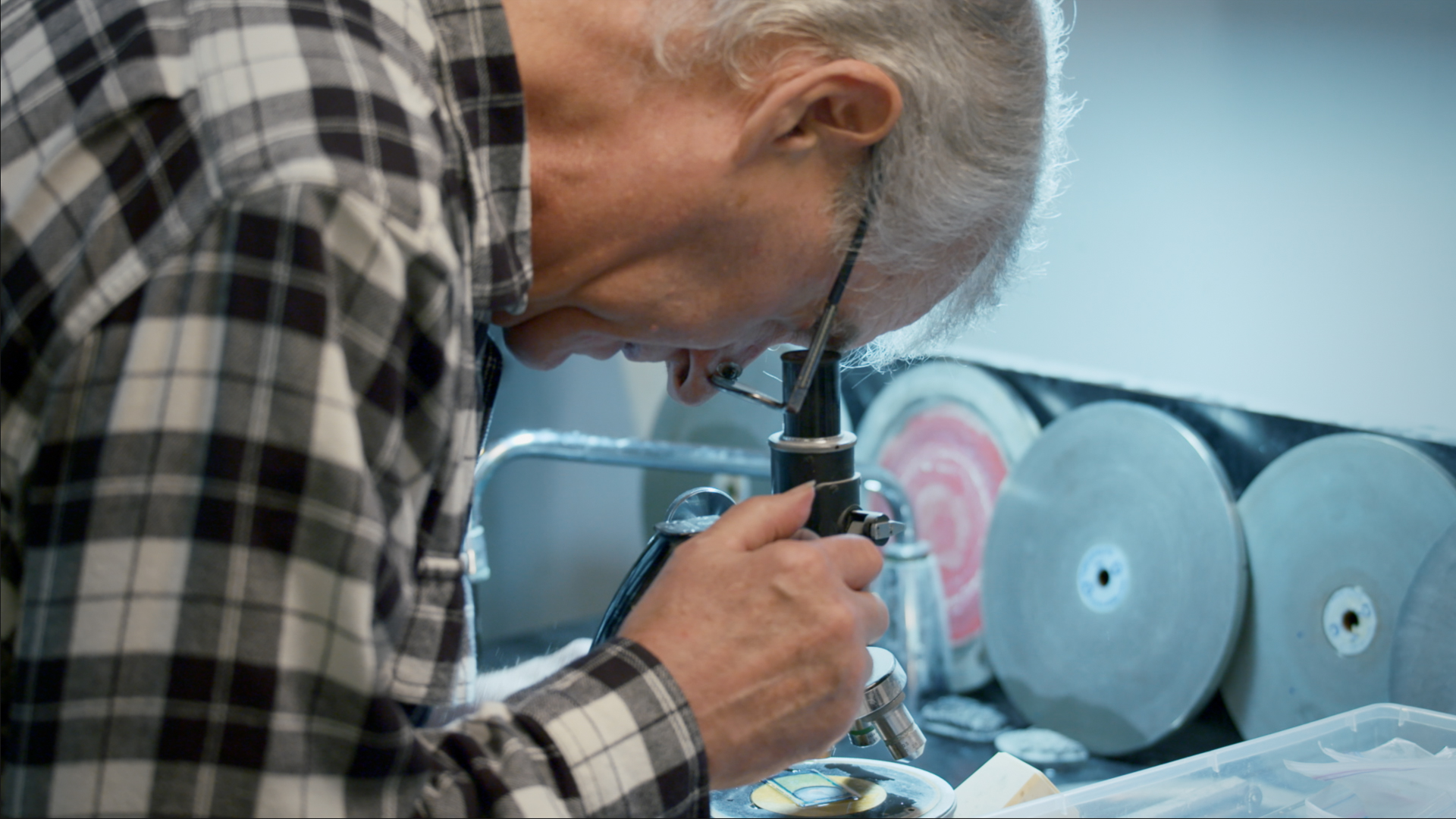
Every sample had to be carefully cut, mounted, ground paper-thin, analyzed, photographed, and documented. In many ways, Ray helped make the invisible visible.
There are some people whose names become widely recognized through books, films, and conference stages. Then there are others whose work quietly supports and strengthens the efforts of countless people around them, often without much public attention at all. Our friend Ray Strom was one of those men.
Recently, Ray passed away, and many throughout the biblical creation community have been reflecting on the life and legacy he leaves behind. For those who had the privilege of working alongside him, the loss feels especially personal. Ray was not only an accomplished geochemist and researcher, but also a kind and thoughtful man who genuinely loved the study of God’s creation and the pursuit of truth.
Ray graduated from the Southern Alberta Institute of Technology in 1971 with a background in industrial chemistry, eventually spending decades working in laboratory science, sample analysis, microscopy, and research connected to the oil and gas industry. Over time, his expertise in rock imaging, thin section preparation, mineral analysis, and geological processes became widely respected.
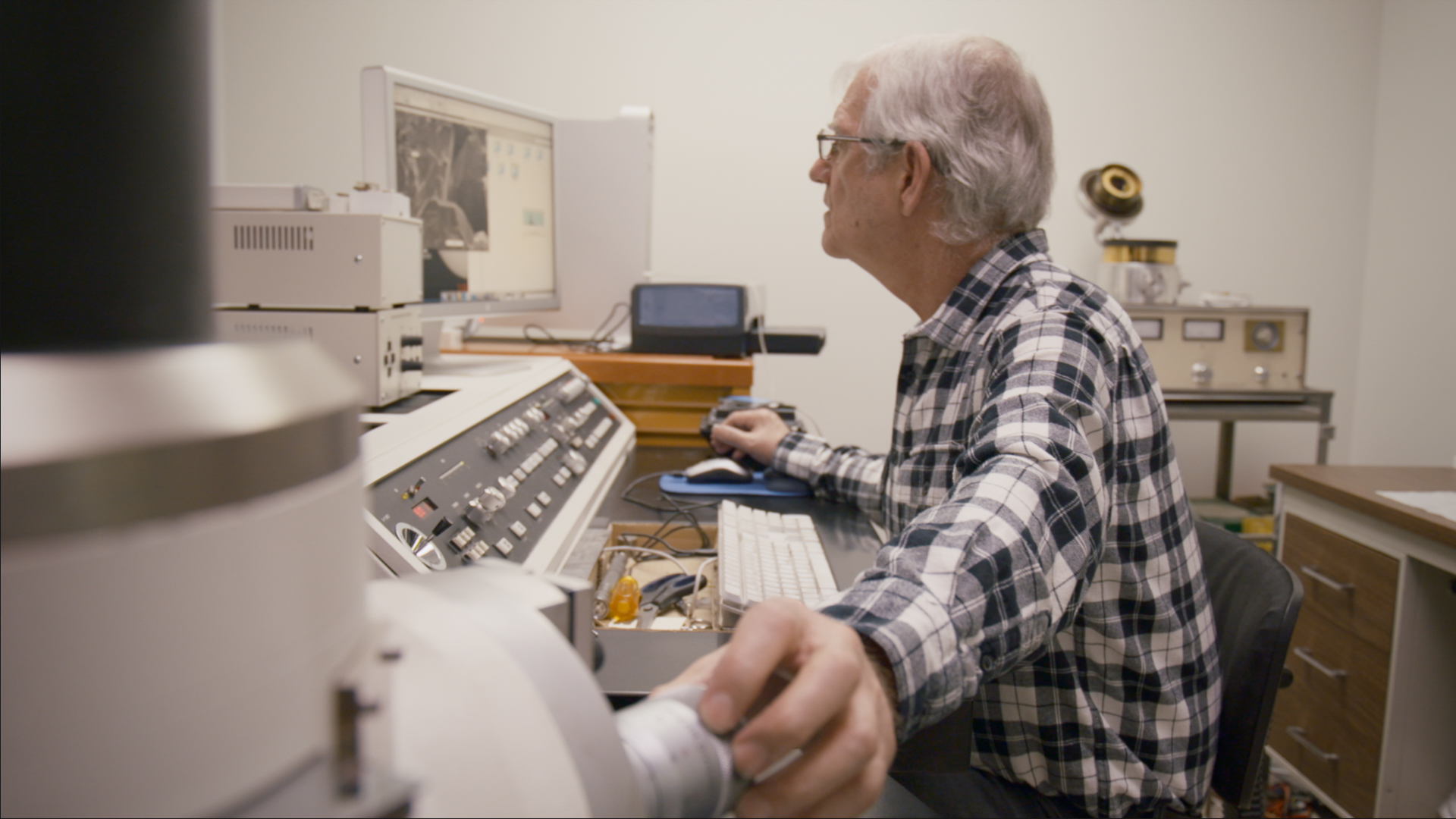
Ray looking at images from the scanning electron microscope. Image courtesy of “Is Genesis History?”
Many people may recognize Ray’s work through the research project featured in the documentary film Is Genesis History? Mountains After the Flood. In 2017, we had the privilege of conducting the river and research trip with Dr. Andrew Snelling, Dr. John Whitmore, and others in the Grand Canyon for a major study involving folded sedimentary rock layers exposed deep within the canyon. The project centered around an important geological question: were these layers slowly bent long after hardening into solid rock over supposed vast ages of time, or were they folded rapidly while still soft and unconsolidated during or shortly after the catastrophic geological processes associated with the Flood? Dr. Snelling’s published research paper on that helps answer the question.
The fieldwork involved rafting through the Grand Canyon on the Colorado River and hiking into remote locations within the canyon to carefully collect documented rock samples directly from the folds themselves. Those samples eventually made their way north to Ray’s laboratory in Calgary. There, much of the painstaking scientific work truly began. Ray prepared the thin sections used in the study, performed X-ray diffraction analyses, conducted scanning electron microscope imaging, and helped produce the microscopic data that became foundational to the published research. The work required patience, precision, and an enormous amount of technical skill. These were not quick or simple procedures. Every sample had to be carefully cut, mounted, ground paper-thin, analyzed, photographed, and documented.
In many ways, Ray helped make the invisible visible.
Much of that work never appears on screen in the documentary, yet it was absolutely essential. Beneath the microscope, details within the sandstone began telling a remarkable story. Grain contacts, cementation, deformation features, mineral orientation, and porosity all became pieces of evidence helping researchers better understand the conditions under which these rock layers were folded. Ray’s precision, patience, and scientific skill played a major role in making those observations possible.
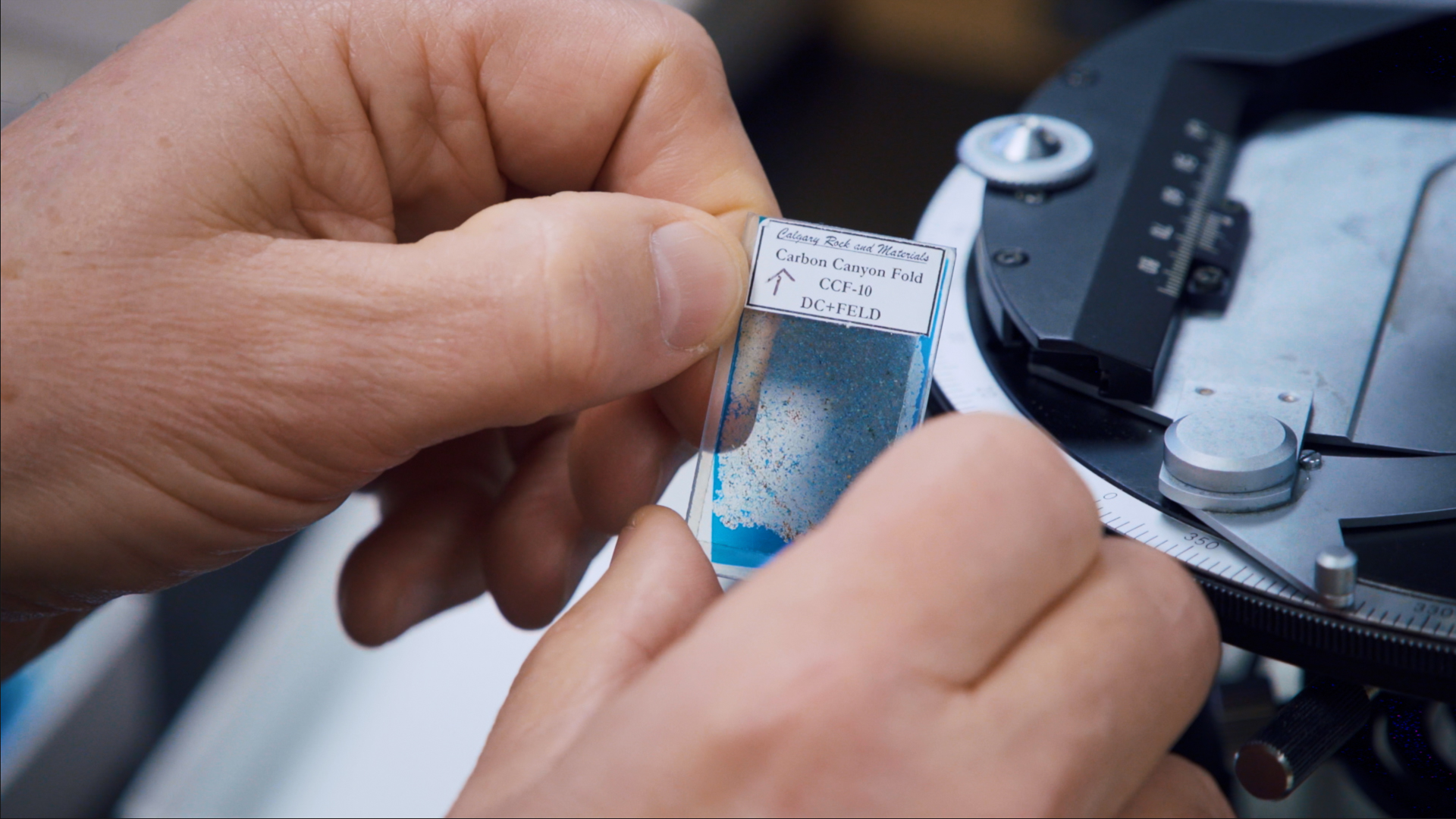
Thin slice of the Tapeats Sandstone from the Carbon Canyon Fold. Image courtesy of “Is Genesis History?”
In many ways, Ray represented something important within the creation science movement. He demonstrated that rigorous scientific work and deep confidence in God’s Word are not enemies of one another. He approached the evidence carefully and thoughtfully while remaining firmly grounded in the authority of Scripture. For him, studying rocks was never disconnected from studying the handiwork of the Creator Himself.
At Canyon Ministries, we remain incredibly grateful for Ray’s contributions to the folds research project and to biblical creation science as a whole. His work helped strengthen one of the most important geological studies connected to Grand Canyon research in recent years, and his efforts continue to influence how many people understand the evidence surrounding these remarkable folded rock layers today.
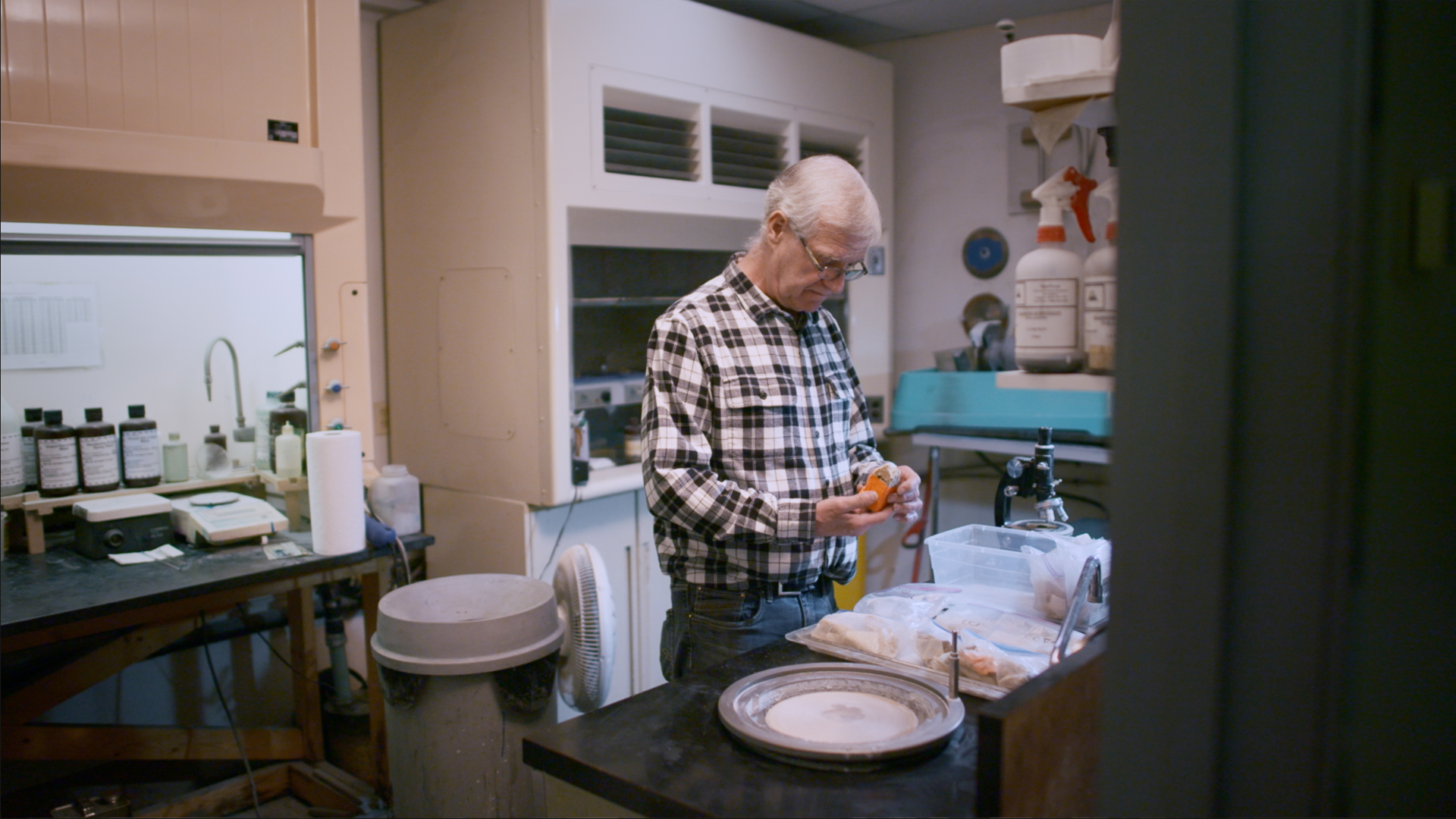
Ray holding a sample of Grand Canyon Tapeats Sandstone. Image courtesy of “Is Genesis History?”
The Grand Canyon is filled with layers that tell a story of immense geological processes from the past. Hidden within those rocks are microscopic details Ray spent countless hours studying and helping others understand. Long after documentaries fade and research papers are shelved, the impact of faithful men like Ray Strom continues through the lives they influenced, the work they strengthened, and the confidence they helped build in the truthfulness of God’s Word.
“Great are the works of the LORD, studied by all who delight in them.” — Psalm 111:2 (ESV)


Nancy Wiebe
Ray’s final graduation is on Monday June 1, 2026 at Rocky Mountain Calvary Chapel in Calgary at 2 pm. Calvarychapel.ca