



Florida’s Geology Through the Lens of Noah’s Flood
Nate Loper – June 5, 2026
Florida is not a simple one-event landscape. It is more like a layered story.
Being in Florida right now sharing about Canyon Ministries at the Southern Baptist Annual Meeting has me thinking about geology in a different way than I usually do.
Out West, geology is obvious. You stand on the rim of the Grand Canyon and the rocks are right there in front of you, stacked in massive layers like a giant open book. In the West, you see cliffs, canyons, faults, folds, desert badlands, volcanic fields, and huge erosional features. The landscape practically begs you to ask, “What happened here?”
Florida is different.
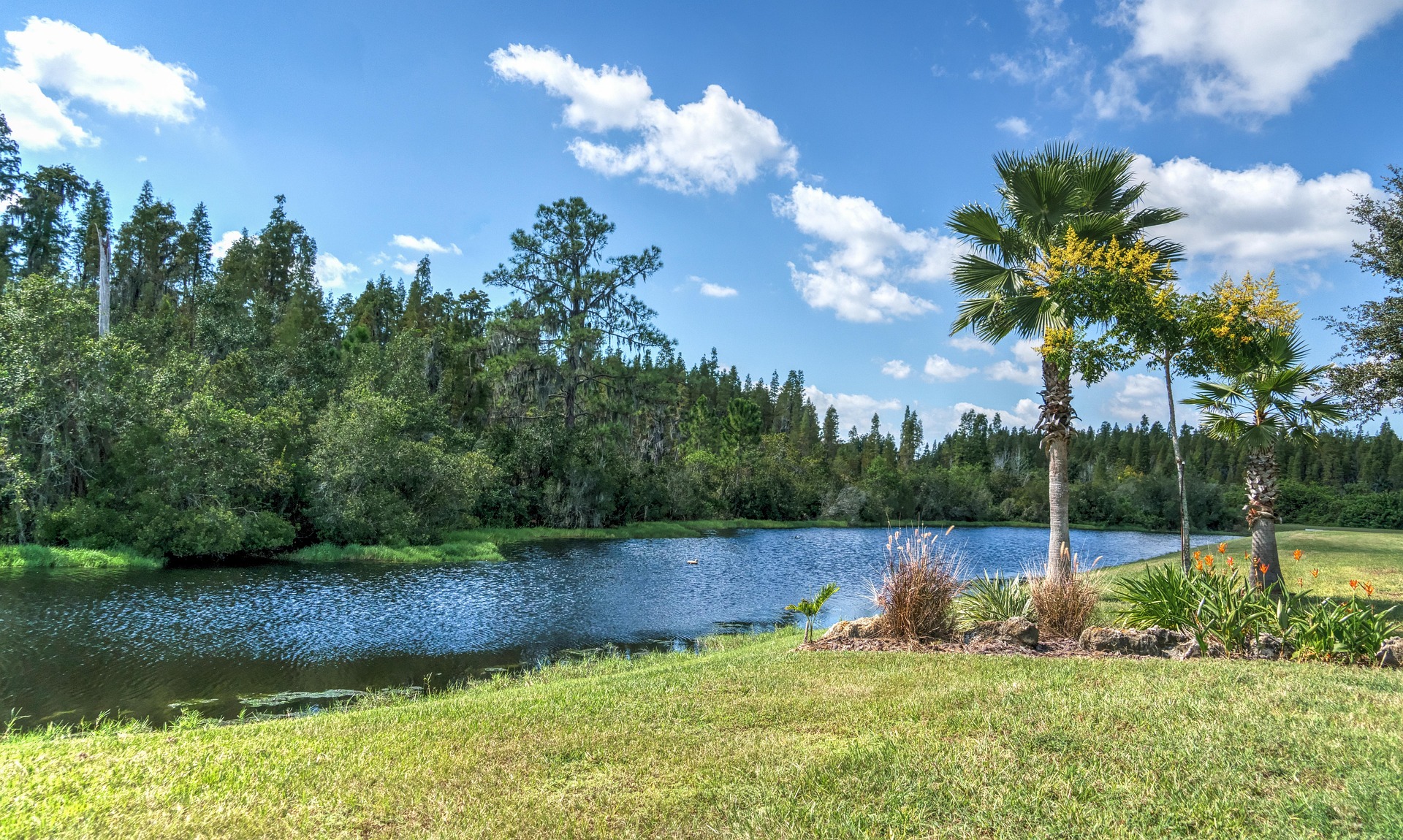
At first glance, Florida does not feel very geological. It is low, flat, green, wet, sandy, and covered in vegetation. Instead of towering cliffs and exposed rock layers, you get beaches, swamps, springs, rivers, sinkholes, shell beds, phosphate mines, and fossil-rich gravel bars. The geology is not shouting at you from a canyon wall. It is hiding under your feet.
But once you start paying attention, Florida is actually a fascinating place to think about biblical creation, Noah’s Flood, the post-Flood world, and the Ice Age.
Florida may be flat, but it is not geologically boring.
 Much of Florida is built on limestone and other marine deposits. That alone is significant. Limestone is commonly made from the remains of sea creatures, shells, carbonate muds, reefs, and other materials connected to ocean environments. In other words, the foundation of Florida is not mainly a story of dry land. It is a story of water, sea life, burial, cementation, and later erosion.
That fits well with the kinds of questions biblical creationists should be asking. If Noah’s Flood was a real global event, then we should expect to find massive evidence of marine activity across the continents. We should expect water-deposited sediments, buried sea creatures, fossil-rich layers, and signs of huge changes in sea level and land elevation. Florida gives us a different window into that story than the Grand Canyon does, but it is still part of the same larger biblical history.
One of the most interesting things about Florida is its fossils.
The state is famous for shark teeth, including megalodon teeth, along with shells, rays, fish, marine mammals, corals, dugong-like animals, and other sea creatures. But Florida is also rich in land-animal fossils, including mammoths, mastodons, horses, giant ground sloths, saber-toothed cats, bison, and other Ice Age animals.
That mix is fascinating.
From a biblical creation perspective, we do not have to cram every fossil into the exact same moment of Noah’s Flood. That is too simplistic. Some fossils may represent creatures buried during the Flood or during the later stages of the Flood. Others may belong to the post-Flood world, especially the Ice Age that followed. Still others may have been eroded out of older deposits and reworked by rivers, waves, storms, or later flooding.
That is especially clear in places like the Peace River area near Arcadia. People go there to sift river gravels for shark teeth and other fossils. But those fossils are not necessarily sitting exactly where they were first buried. Many have been eroded out of older sediments, carried by water, mixed together, and redeposited in modern river gravels.
That makes the Peace River a great teaching example. It shows that fossil interpretation is not always as simple as, “Here is a fossil, therefore this exact spot is where the animal died and was buried.” Sometimes fossils have a longer history. They may have been buried, hardened, eroded out, transported, broken, and buried again.
In a biblical framework, that is not a problem. It is actually what we would expect in a world that has experienced catastrophe, retreating floodwaters, changing coastlines, active rivers, and post-Flood climate changes.
 Florida also has a major Ice Age story.
In the biblical creation model, the Ice Age happened after Noah’s Flood. The Flood would have left behind warmer oceans, massive volcanic activity, changed weather patterns, and the right conditions for heavy snowfall in some parts of the world. While northern regions were covered in ice, Florida remained ice-free and became home to many animals that later went extinct.
That helps make sense of why Florida has so many Ice Age fossils. Mammoths, mastodons, giant sloths, horses, and other animals were not “prehistoric creatures from a world before man.” They were part of the post-Flood world. They spread out after the Flood, lived during the Ice Age, and many eventually disappeared because of climate change, habitat shifts, hunting, disease, competition, or some combination of factors.
Apart from fascinating fossils, Florida is known for its many sinkholes, caves, springs, disappearing streams, and huge groundwater systems because so much of the state sits on limestone. Water dissolves limestone. Over time, underground cavities form. Sometimes the ground collapses into those cavities, creating sinkholes. Springs pour out where groundwater finds its way back to the surface.
This is another reminder that geology does not stop after the Flood. The Flood laid down and reshaped huge portions of the earth’s surface, but the post-Flood world remained extremely active. Water kept moving. Rivers adjusted. Coastlines changed. Sea levels rose and fell. Limestone dissolved. Caves formed. Springs developed. Sinkholes opened.
Florida is full of that kind of post-Flood action.
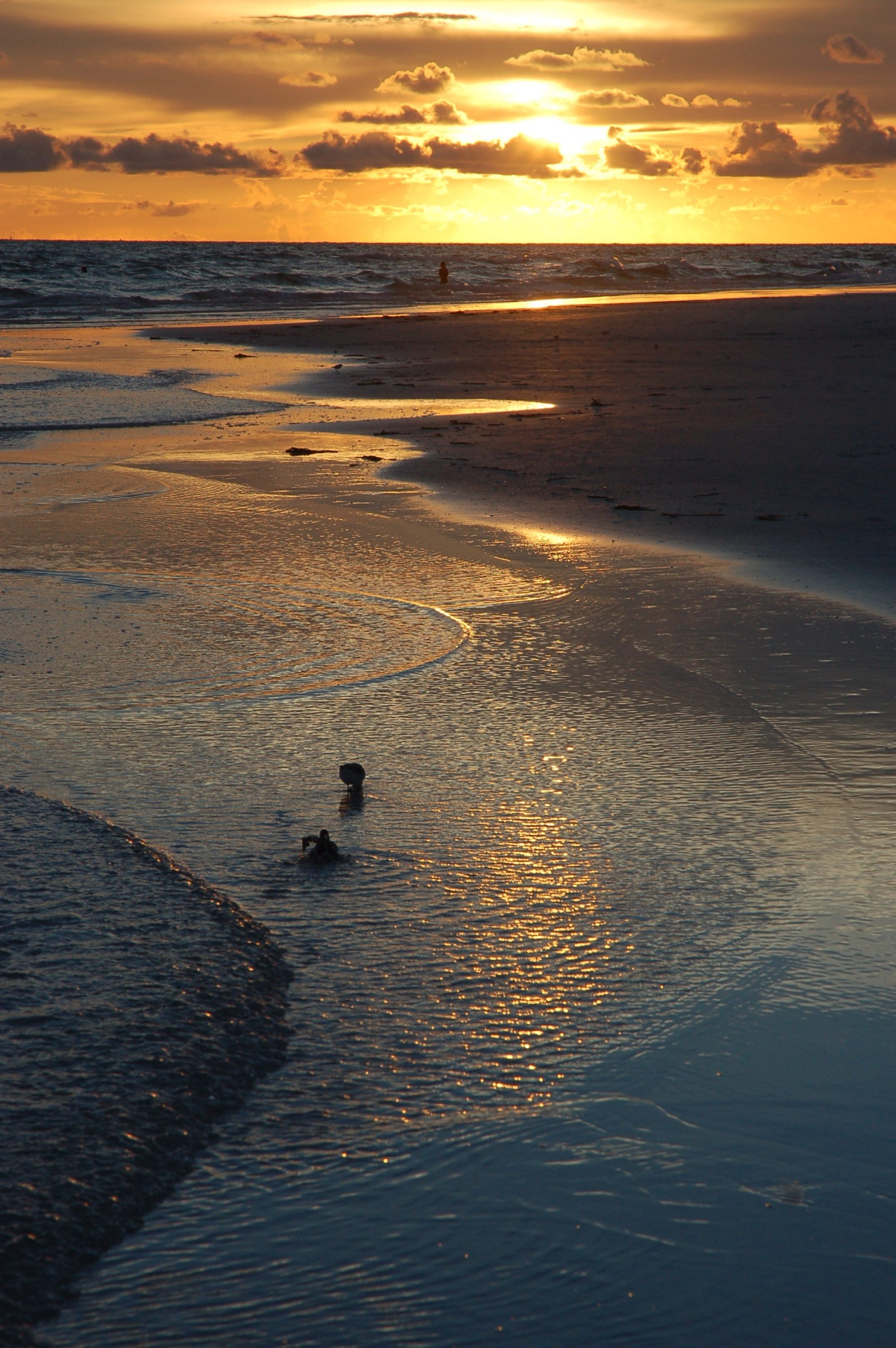 So when we look at Florida’s coasts, reefs, keys, beaches, and marine terraces, we are not just looking at “slow and gradual change over millions of years.” We are looking at a landscape that may preserve evidence of Flood retreat, post-Flood adjustment, Ice Age sea-level change, and modern coastal processes all layered together.
Florida is not a simple one-event landscape. It is more like a layered story. There is Flood history here. There is post-Flood history here. There is Ice Age history here. There is modern reworking happening even now.
The mistake would be to look at Florida and say, “Well, it is flat, so there is not much geology here.”
No way.
Florida has marine fossils underfoot. It has limestone beneath the surface. It has rivers full of fossil gravel. It has sinkholes opening into hidden cavities. It has springs flowing out of underground aquifers. It has phosphate deposits packed with clues from the past. It has beaches and keys shaped by changing sea levels. It has Ice Age animals buried in its sediments.
Florida may not have the drama of the Grand Canyon, but it has its own powerful testimony.
The Grand Canyon tells the story loudly, with cliffs and layers and mile-deep erosion.
Florida tells it quietly, through fossils, limestone, springs, and sand.
But both remind us of the same truth: the earth has a history, and that history is not disconnected from the Bible. The world we see today is not the world as it was originally created. It has been shaped by creation, corruption, catastrophe, and restoration. It has been shaped by life and death, water and sediment, judgment and mercy.
So being here in Florida has been a good reminder for me that sometimes the most interesting geology is not the kind towering above you.
Sometimes it is the kind beneath your sandy feet.


David Bonnette
We used to live in Florida and did the fossil float with Tom Derosa a couple of years in a row. It’s cool to see you discuss that.
Nate Loper
Nice! I’ve always wanted to do that. -Nate
Wendy
Thanks for posting this brief, but interesting article about Florida geology history.
Michael Fourman
Great article new perspective thanks Nate