



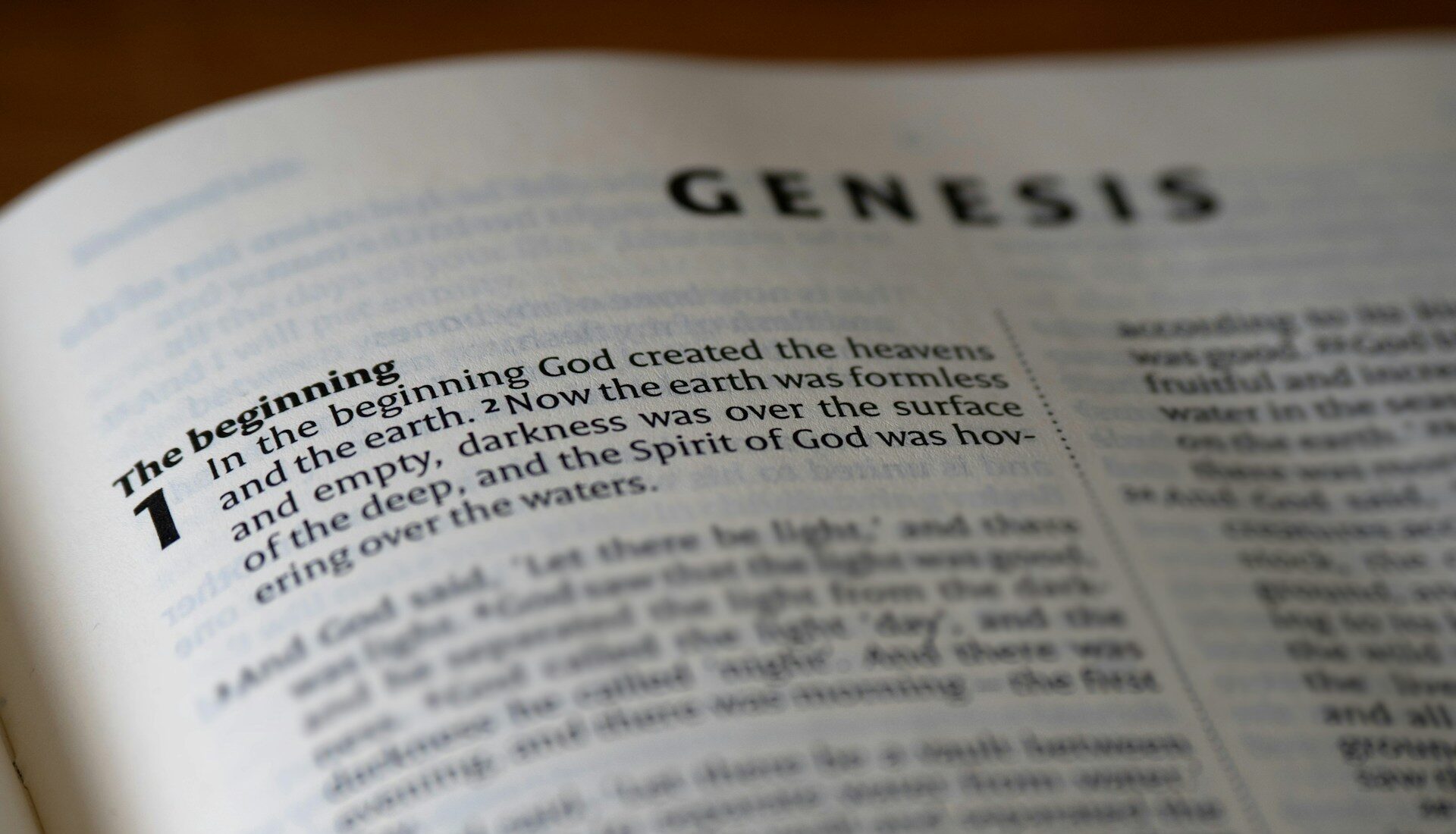
Why Defend Genesis? The Gospel-Centered Purpose for Creation Apologetics
Luke Wayne – March 07, 2025
We focus on the opening chapters of the Bible because they lay a vital foundation for that gospel message, one that is particularly neglected in today’s world.
Creation, the Fall, and the Gospel
The central point, not only of our faith, but of all of human history is found in the life, death, and resurrection of the Son of God. So, why do we as a ministry put so much emphasis on the first eleven chapters of Genesis rather than focusing our tours on, say, defending the four Gospels? Isn’t Creation more of a side issue? The truth is, we have not taken our eyes off the Good News of Jesus Christ. Heaven forbid! We focus on the opening chapters of the Bible because they lay a vital foundation for that gospel message, one that is particularly neglected in today’s world.
The God of the Gospel
Jesus came into the world, lived a perfect life, and died for our sins so that we may “be reconciled to God” (2 Corinthians 5:20). But that message assumes a particular God. We have not sinned against Zeus. We do not need peace with Vishnu. There is no salvation in Baal or Osiris. If we put our trust in the forgiveness of Krishna, we are still lost, even if we think Jesus bought us that forgiveness. We are called to set aside our false gods, repent of our idols, and turn to the one true God: Yahweh, Jehovah, the LORD, the great I AM.
What does this have to do with Genesis? Much in every way! All through the Bible, we see that creation is definitional to who God is. It is central to the identity of God and sets Him apart from the lesser petty deities we falsely worship. The God of the gospel is the Creator of heaven and earth. Thus, when Jonah is asked by the pagan sailors which God he serves, we read:
“And he said to them, ‘I am a Hebrew, and I fear the LORD, the God of heaven, who made the sea and the dry land.’” (Jonah 1:9, ESV).
 And when the Apostle Paul first brought the gospel to gentiles who worshiped foreign gods, he clarified that he was speaking of “The God who made the world and everything in it, being Lord of heaven and earth…” (Acts 17:24, ESV), and again, in another city:
“…we bring you good news, that you should turn from these vain things to a living God, who made the heaven and the earth and the sea and all that is in them.” (Acts 14:15, ESV)
Thus, to the prophets and apostles, creation was an identity marker that clarified who God is and contrasted Him with the false gods of the nations. Sharing the good news, in part, involved declaring God as the absolute Creator. This was also central in biblical prayer and worship, which is filled with refrains like:
“You are the LORD, you alone. You have made heaven, the heaven of heavens, with all their host, the earth and all that is on it, the seas and all that is in them; and you preserve all of them; and the host of heaven worships you.” (Nehemiah 9:6, ESV).
Jesus and Creation
For a closer look at how Jesus treated Moses and Genesis as authoritative history, see Genesis and Jesus.
If creation is part of the very definition of who God is, it is unsurprisingly used by the biblical authors to clarify who Jesus is in His full deity and equality with the Father. John draws on the very words of Genesis 1:1 when he opens his Gospel:
“In the beginning was the Word, and the Word was with God, and the Word was God. He was in the beginning with God. All things were made through him, and without him was not any thing made that was made.” (John 1:1-3, ESV)
Paul likewise writes of Jesus:
“For by him all things were created, in heaven and on earth, visible and invisible, whether thrones or dominions or rulers or authorities—all things were created through him and for him. And he is before all things, and in him all things hold together.” (Colossians 1:15-17, ESV)
And the author of the Book of Hebrews concurs:
“but in these last days he has spoken to us by his Son, whom he appointed the heir of all things, through whom also he created the world. He is the radiance of the glory of God and the exact imprint of his nature, and he upholds the universe by the word of his power. After making purification for sins, he sat down at the right hand of the Majesty on high,” (Hebrews 1:2-3, ESV)
Creation is foundational to who Jesus is as well as what He has done for us. These points alone make creation an important part of proclaiming the gospel, especially to a culture that has strayed so far from a biblical worldview as to hollow out both the word “God” and the name “Jesus,” filling them with novel, unbiblical meanings. Creation brings clarity.
The Historical Adam and the Gospel
Why was the death of Jesus necessary to save mankind? Why was the death of Jesus enough to cover the sins of all mankind? The answer is rooted in Genesis 2 and 3 as historical events!
The connections between the gospel and the early chapters of Genesis extend far beyond the mere fact of creation. For example, the New Testament draws a direct and theologically significant connection between the person and work of Jesus and the historical Adam. This is established even in Jesus’ genealogy (Luke 3:38)!
That Adam was literally created from the dust of the earth is tied to the fact that Jesus literally came down from heaven:
“The first man was from the earth, a man of dust; the second man is from heaven. As was the man of dust, so also are those who are of the dust, and as is the man of heaven, so also are those who are of heaven. Just as we have borne the image of the man of dust, we shall also bear the image of the man of heaven.” (1 Corinthians 15:47-49, ESV)
It would be difficult to allegorize the creation of Adam from dust in this passage while insisting that Jesus being sent down from heaven is literal history. Likewise, the Genesis 3 account that death entered the whole world through Adam’s sin explains how the death of the sinless Jesus can purchase salvation and life for the whole world:
“For as by a man came death, by a man has come also the resurrection of the dead. For as in Adam all die, so also in Christ shall all be made alive.” (1 Corinthians 15:21-22, ESV)
“Therefore, just as sin came into the world through one man, and death through sin, and so death spread to all men because all sinned” (Romans 5:12, ESV)
Why was the death of Jesus necessary to save mankind? Why was the death of Jesus enough to cover the sins of all mankind? The answer is rooted in Genesis 2 and 3 as historical events!
Sin, Death, and the Age of the Earth
These passages also raise a fundamental issue that cannot be ignored: the direct connection between sin and death. If death actually entered the world through the disobedience and rebellion of Adam and Eve as the genuine, historical ancestors of all mankind, this has profound implications for how we view history.
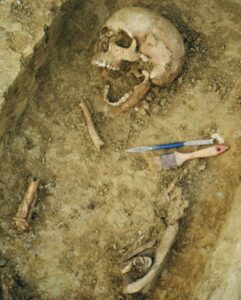
Any human remains we unearth are descendants of that first couple. What’s more, they are obviously the remains of someone who died. Go as far back in the historical record as you like. Call them “cavemen,” “Cro-Magnon,” “neanderthal,” etc. Whatever else they may be, they are dead men and women. This is significant because, as we just read in Romans, “sin came into the world through one man, and death through sin.” These men and women could not have died before the Fall. Since the genealogies in Genesis allow us to calculate a pretty reasonable estimate of when Adam lived, all of human history belongs in that limited timeline.
But the implications for our view of history run deeper still. The effects of sin are not limited to the lineage of man. The impact of the Fall was cosmic. As Paul writes later in the same letter:
“For the creation waits with eager longing for the revealing of the sons of God. For the creation was subjected to futility, not willingly, but because of him who subjected it, in hope that the creation itself will be set free from its bondage to corruption and obtain the freedom of the glory of the children of God. For we know that the whole creation has been groaning together in the pains of childbirth until now. And not only the creation, but we ourselves, who have the firstfruits of the Spirit, groan inwardly as we wait eagerly for adoption as sons, the redemption of our bodies.” (Romans 8:19-23, ESV)
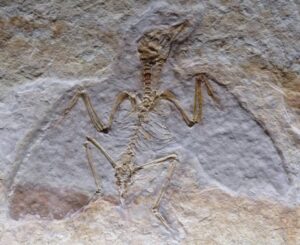
Suffering and mortality throughout creation are tied to our corrupted state. All of creation awaits the redemption of man. It is subject to futility on our account! So, human sin is not merely responsible for human death. We are responsible for the groaning, pain, and death felt throughout the created order! The impact this has on the history of the fossil record and the rocks that contain those fossils is profound. Not only the history of man, but the history of all suffering and death belongs to the time during and after the lives of Adam and Eve.
 What does this have to do with the gospel? A lot, actually! Jesus paid for our sins by dying precisely because death is the consequence of sin. He arose bodily from the grave because, having paid the price and done away with sin, He had undone the cause of death. Reversing the curse, He defeated death and rose to life immortal. There is a direct connection between paying for sin and overcoming death. This is why Paul insists that:
“if Christ has not been raised, your faith is futile and you are still in your sins.” (1 Corinthians 15:17, ESV)
All of this makes sense only in a world where physical death is the result of sin. If death was a part of the original good creation prior to Adam’s sin, then why should paying for sin reverse death? What would resurrection have to do with the forgiveness of sin? The good news of the sacrificial death and triumphant resurrection of Jesus Christ to take away our sins and grant us eternal life rests on the basic foundation that physical death is a consequence of human sin. Any view of history that forces us to question that fact is (often unintentionally but nevertheless meaningfully) calling into question the very logic of the gospel.
This text in Romans 5:12 speaks only of the death of humans. Romans 8:19–23 provides the best text showing death (corruption) came upon all creation as a result of Adam’s disobedience.
A Death in Our Place to Cover Our Shame
Even the smaller details of the history of Eden point us to deeper truths of the gospel. For example, consider the shameless nakedness of Adam and Eve prior to the Fall:
“And the man and his wife were both naked and were not ashamed.” (Genesis 2:25, ESV)
When Adam and Eve sinned, death was not the only thing introduced to our world. Sin also brought about shame, a shame they sought immediately (and ineffectually) to cover with their own efforts:
“Then the eyes of both were opened, and they knew that they were naked. And they sewed fig leaves together and made themselves loincloths.” (Genesis 3:7, ESV)
This sin-born shame is tied to our new state of separation in our relationship with God. Adam once walked with God, now he hides from Him:
“And he said, ‘I heard the sound of you in the garden, and I was afraid, because I was naked, and I hid myself.’” (Genesis 3:10, ESV)
Adam was not merely afraid of judgment. Surely that was there. God had warned him that on the day he disobeyed and ate of the fruit that he would die. Judgment loomed over Adam, and rightly so. Yet, that’s not the reason Adam gives for his fear. He was afraid because he was naked. This was a fear born out of shame. Poignantly, the first death in Eden was an innocent sacrifice on Adam and Eve’s behalf, to cover their shame.
“And the LORD God made for Adam and for his wife garments of skins and clothed them.” (Genesis 3:21, ESV)
Yet, physical clothes alone are only an outer symbol of our inner need, like the animal sacrifices of the Mosaic Law. Just as “it is impossible for the blood of bulls and goats to take away sins” (Hebrews 10:4, ESV), so too “no creature is hidden from his sight, but all are naked and exposed to the eyes of him to whom we must give account” (Hebrews 4:13, ESV). This side of eternity, we still live with this shame barely hidden. It is only in Christ that we hold out the eternal hope of a permanent solution, as Paul says:
“For in this tent we groan, longing to put on our heavenly dwelling, if indeed by putting it on we may not be found naked.” (2 Corinthians 5:2-3, ESV)
Christ offers those who repent and turn to Him “white garments so that you may clothe yourself and the shame of your nakedness may not be seen” (Revelation 3:18, ESV). Thus, this theme of our naked shame and our need to be fully and finally clothed in order to be restored to the dignity of a right fellowship with God and with one another runs through the Bible. Beginning in Genesis 3, it finds its fulfillment in our eternal hope through Jesus Christ.
The First Prophecy of Christ
The early chapters of Genesis do more than teach us the problem; they also foreshadow the solution. Genesis 3 gives us more than the history of our need for the gospel; it also contains the first preaching of that gospel, an oracle of God’s plan to destroy the devil and rescue us from our self-inflicted plight.
As God pronounces judgment on the serpent, He also proclaims what is to come:
“I will put enmity between you and the woman, and between your offspring and her offspring; he shall bruise your head, and you shall bruise his heel.” (Genesis 3:15, ESV)
While this can be read simply as a description of the ongoing struggle between humans and snakes after the fall, both Jewish and Christian sources have seen in it something far more: a prophecy of the Messiah’s final victory over the serpent and deliverance of mankind.
One specific, singular “offspring of the woman” would one day come to receive wounds from the serpent and finally crush the serpent’s head. The sacrificial death of the Messiah would undo what the wicked snake had done and rescue mankind from our fall through His own suffering. This is the gospel in a nutshell!
Conclusion: Creation Apologetics Matters!
It is possible to believe the gospel and be saved without holding a literal, historical view of Creation and the Fall, and many of our brothers and sisters in Christ do just that. Yet Genesis 1-3 provides an essential foundation on which the gospel rests. The historical reality of the one Creator God and the genuine accounts of the life and fall of Adam and Eve as our actual historical ancestors matter deeply to the truth of who Jesus is and why His death and resurrection matter. These are vital truths worth embracing and defending.

Dave Klein
Thank you for this article! It very clearly shows that we can’t separate Jesus, our Savior, from Jesus, our Creator!
Deborah A Dunn
This is a very insightful article on all the ways the creation account in Genesis 1-3 is intertwined with the Gospel. Thank you especially for addressing nakedness and moral shame. I had never considered this before!
Nick
Well-said! The law of sin and death is at stake! (Rom 5:12, 6:23, 8:2)