



The Pale Blue Dot God Chose to Visit
Nate Loper – July 2, 2026
The stars declare the glory of God, but the cross declares His love.
There is something wonderfully humbling about sleeping at the bottom of the Grand Canyon.
On our recent Stargazer Special river trip, days were filled with the kind of beauty that almost overwhelms the senses. Towering canyon walls rose above us in layers of color and stone. The Colorado River carried us through narrow corridors, around sweeping bends, past cliffs, side canyons, fossils, and folds.
But then night would come.
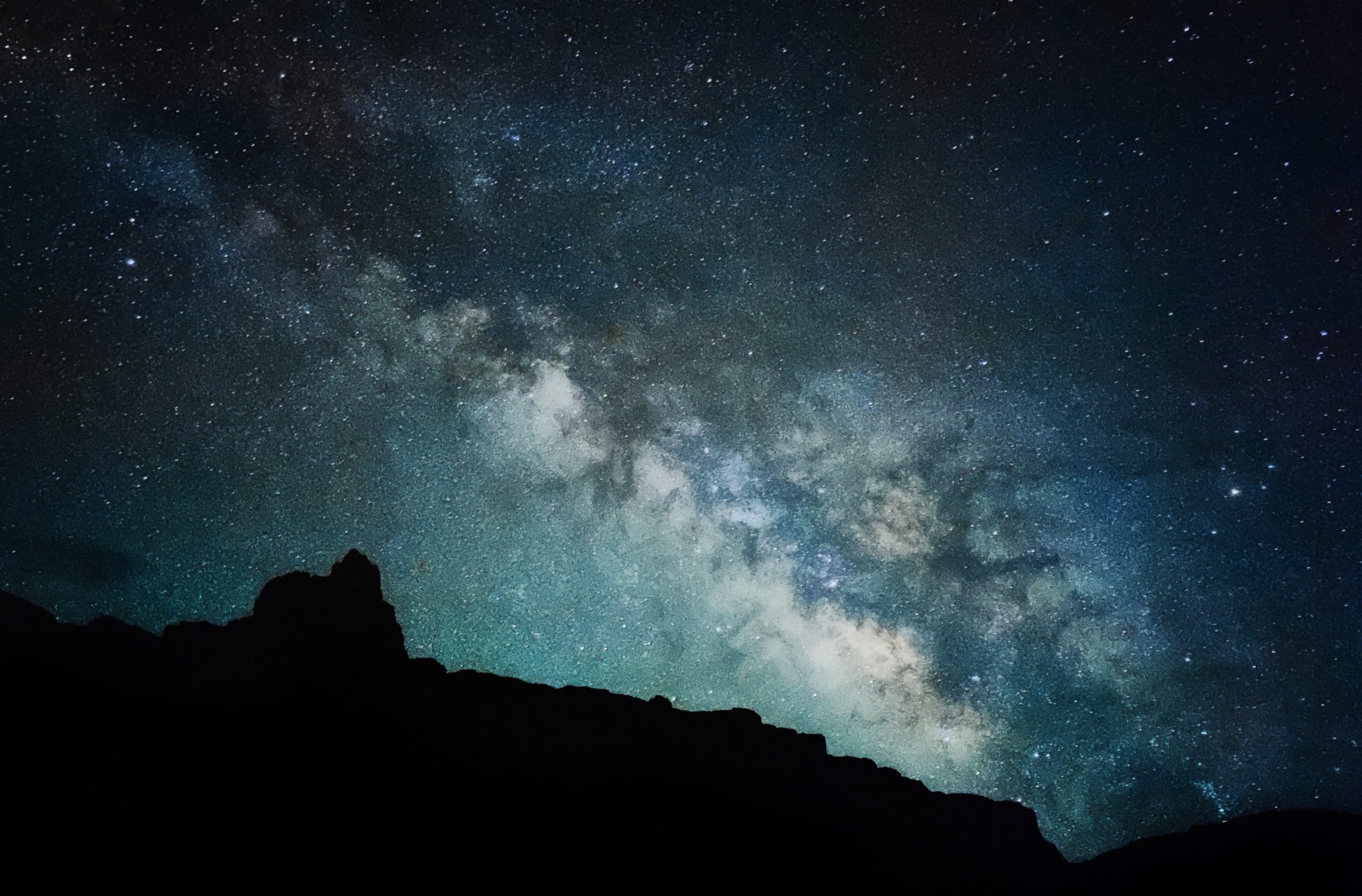
As the last light faded from the canyon walls and the river settled into darkness, the sky opened above us. Far from city lights, the heavens seemed almost close enough to touch. Stars multiplied by the thousands. The Milky Way stretched across the night like a river of light above the river of water below. Planets, constellations, satellites, meteors, and the deep blackness between them all reminded us that the Grand Canyon, as immense as it feels when you are inside it, is still only a tiny crease on the surface of a small planet.
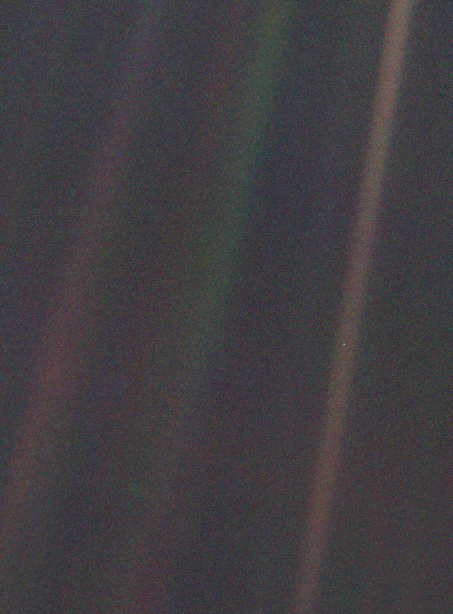
This image of the Earth, dubbed ‘Pale Blue Dot’, is a part of the first ever ‘portrait’ of the solar system taken by Voyager 1 in 1990.
Standing beneath that sky, it is hard not to feel small.
The universe is vast beyond ordinary comprehension. Our sun, which feels so dominant from the surface of the earth, is only one star among countless others. Our galaxy is only one among countless galaxies. The scale of creation stretches beyond what the human mind can easily grasp. We measure distances in light-years because miles are too small a language for the heavens. We speak of stars whose light has traveled across immense reaches of space before ever reaching our eyes. We look up and see beauty, order, power, and mystery spread across the night sky.
And then we look back down.
Here we are, on this small world. A blue and green sphere suspended in space. A pale blue dot, as it has famously been called. In the scale of the cosmos, the earth seems almost unimaginably tiny. The Grand Canyon itself, one of the most breathtaking landscapes on the planet, is invisible from that cosmic perspective. Our camps, our boats, our conversations, our lives—all of it seems so small when measured against the heavens.
Yet this is the world God chose.
That thought may be the most astonishing part of all.
The same God who made the stars also formed the dust of the earth. The One who stretched out the heavens placed humanity here, not as an accident in a meaningless universe, but as the focus of His special attention and care. Scripture does not present mankind as a cosmic afterthought. It tells us that human beings were made in the image of God, placed within His creation with purpose and intent.
Psalm 8 captures this wonder beautifully. When David considered the heavens, the moon and the stars which God had ordained, he asked, “What is man, that thou art mindful of him?” That question feels especially fitting under a Grand Canyon night sky. Why would the Creator of such vastness care for creatures such as us? Why would the Maker of galaxies be mindful of people gathered on a riverbank, staring upward in awe?
And yet He is.
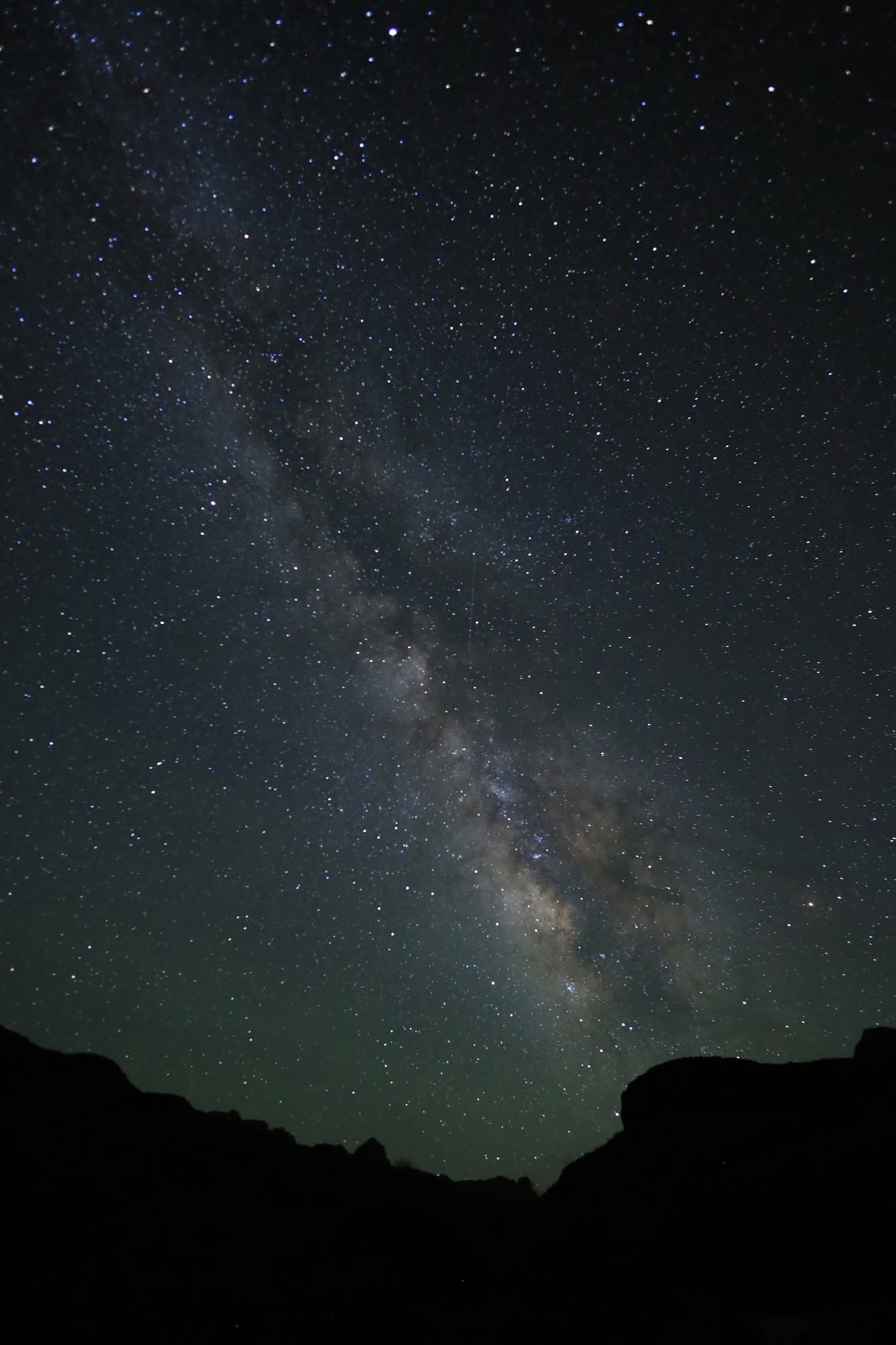
Photo taken by guest Jason Edgington during our recent stargazer trip.
The greatest wonder is not merely that God made the universe. It is that the Creator entered His creation. Of all the places in the vast cosmos, this small earth is where God chose to write the central story of redemption. This is the world where the Son of God took on human flesh. This is the world where Jesus walked dusty roads, calmed storms, touched the sick, welcomed sinners, taught the truth, and revealed the heart of the Father. This is the world where He was rejected, crucified, buried, and raised again.
The stars declare the glory of God, but the cross declares His love.
That reality gives meaning to every canyon wall, every night sky, every breath, and every human life. The universe may be enormous, but size is not the same as significance. Earth may be small in comparison to the galaxies, but it is not insignificant to God. We may feel tiny beneath the stars, but we are not forgotten. The same God who knows the names of the stars also knows the names of His children.
That is what made this Stargazer Special river trip so memorable. It was not only the thrill of the rapids, the grandeur of the canyon, or the beauty of the night sky. It was the way all these things pointed beyond themselves. The canyon reminded us of God’s power. The stars reminded us of His majesty. The gospel reminded us of His mercy.
In the daylight, we explored the depths of the canyon. At night, we looked into the depths of the heavens. And in both, we were reminded that creation is not silent. It speaks of a Creator who is powerful beyond imagination and personal beyond expectation.
The Grand Canyon has a way of making us feel small. The night sky has a way of making us feel even smaller. But the gospel tells us that small does not mean meaningless. In the vastness of the universe, on this tiny blue planet, God has made Himself known. Here, He created. Here, He spoke. Here, He came. Here, He died. Here, He rose again.
And beneath a sky full of stars, that truth may shine brightest of all.