




The Layers Are Real: What the Grand Canyon Actually Shows Us
The sedimentary layers of Grand Canyon are real, extensive, and ordered. The question is not whether the layers exist, but what history best explains them.
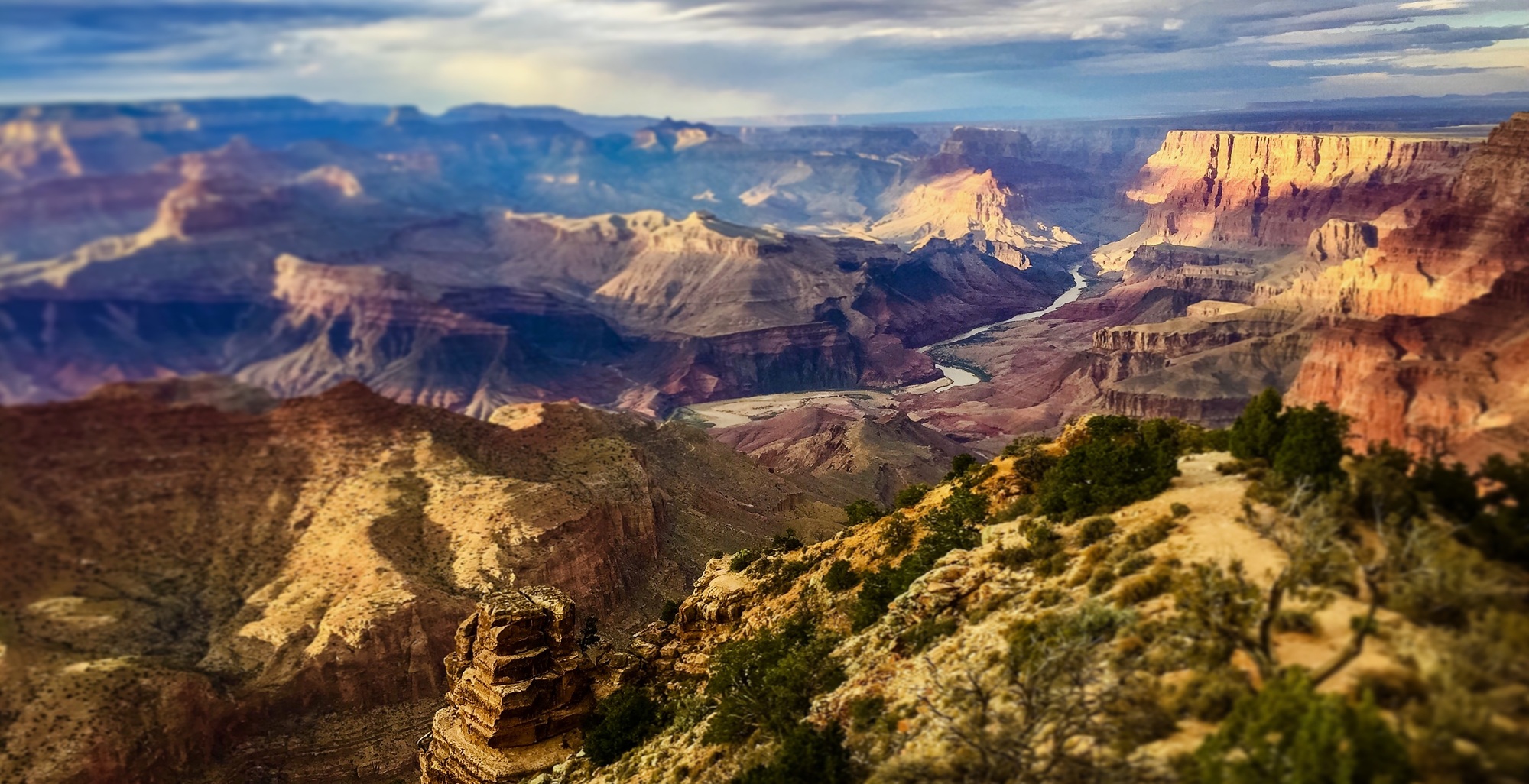
How Was the Grand Canyon Formed? A Catastrophic Lake Spillover Model
Nate Loper - April 29, 2026 If you read most park signs, you'll find the formation of the Grand Canyon is often treated as a simple question of slow erosion and time. A river cut downward over 5.5 to 6 million years and produced the canyon we see today. At first glance that might seem reasonable. But the more closely the landscape is examined, the more that simple explanation begins to fall short. And interestingly, that explanation is losing favor among many geologists today. You see, the canyon is not
Grand Canyon Fossil Discovery: A Snapshot of Life Before the Flood
A recent article from Phys.org announced the discovery of exquisitely preserved Cambrian fossils in the Grand Canyon’s Bright Angel Formation. These fossils include soft-bodied creatures like worms, crustaceans, and mollusk-like animals, preserved with stunning detail. Secular scientists are interpreting this find as evidence of a thriving ecosystem that existed some 500 million years ago, providing a window into what they call the "Cambrian Explosion"—a period of rapid evolutionary diversification in the distant past. As Christians who hold to the authority of Scripture and a young earth, global Flood model,

What I Learned about Grand Canyon in Israel
Nearly 7,500 miles separate Tusayan, AZ on the south rim of Grand Canyon and Timnaʿ National Park in southern Israel. What could anyone possibly find in Israel that might connect it with Grand Canyon? Timnaʿ sits in a desert landscape reminding travelers of some sections of the American Southwest — that is except for the clear differences in fauna and flora. As an example, instead of desert bighorn sheep found in Grand Canyon, Timnaʿ offers ibex. However, the landscapes of both regions display similar geological features. No, the Arabah

The Great Unconformity in the Grand Canyon
The Great Unconformity, then, becomes a powerful visual representation of the type of geological event one would expect to see if there had been a worldwide flood as described in the Bible. One of the places we often explore on our Grand Canyon river trips is a fascinating little side canyon found at river mile 120 called Blacktail Canyon. Blacktail is a very narrow slot canyon, carved predominantly into the golden-brown latticed ledges of the Tapeats Sandstone, a formation known for its striking visual characteristics and its importance in

Ellsworth and Emery Kolb Book
In 1911, Ellsworth and Emery Kolb embarked on a wild adventure retracing the route Major John Wesley Powell took in 1869. What the Kolb brothers called, “The Big Trip” began on the Green River in Wyoming. They spent 101 days traveling the canyons of Wyoming, Utah, Colorado, and Arizona to film the first motion picture of running the rapids and exploring the canyons of the Southwest. This photographic quest challenged their mental and physical abilities unlike anything they had pursued previously. They endured heat, cold, broken equipment, and the
Finding Jewels in Junk – Captain John Hance
Grand Canyon’s First Official Tour Guide, Captain John Hance Some of my favorite moments at the Grand Canyon, whether guiding a rim tour or embarking on a river trip, are those spent learning and sharing “people stories.” These are tales of the adventurous men and women who came before us, explored this majestic place, and left their mark. We often refer to them as “ancestors”—those who came, lived, and shaped the legacy of this Grand Canyon. Among these ancestors, my all-time favorite is Captain John Hance—though “Captain” was a

How US Air Travel was Affected by a Grand Canyon Disaster
On June 30, 1956, Trans World Airlines Flight 2, a Lockheed L-1049 Super Constellation with 64 passengers and 6 crew members departed Los Angeles bound for Kansas City at 9:01 AM on an IFR (Instrument Flight Rules) flight plan and a planned altitude of 19,000’. Three minutes later, United Airlines Flight 718, a DC-7 with 53 passengers and 5 crew members departed Los Angeles climbing to 21,000’ bound for Chicago. The planes’ paths would cross with 2,000’ of vertical separation approximately over the Grand Canyon. Shortly after takeoff, TWA

Bent Rocks
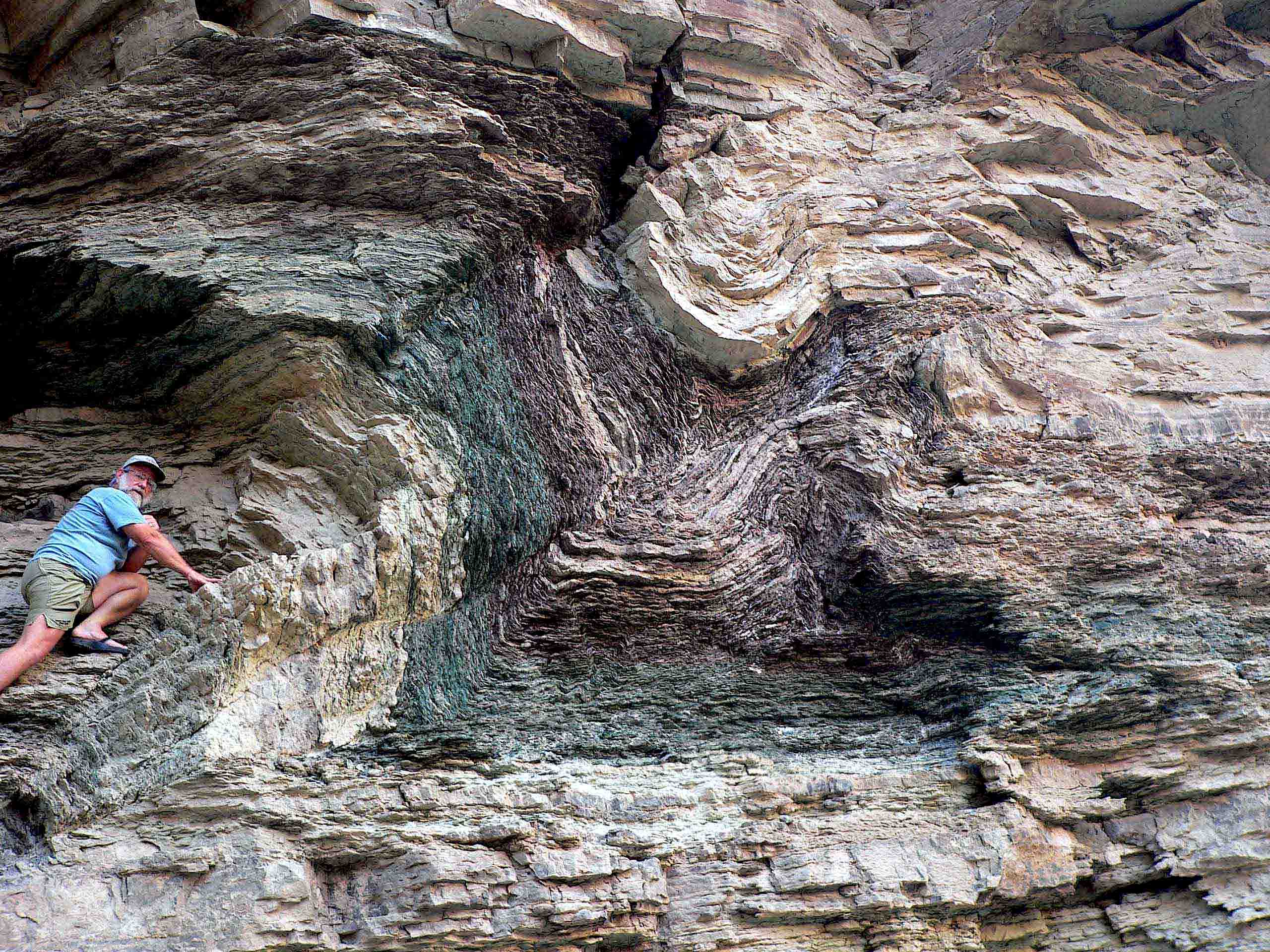
Let’s look at one piece of evidence found in the canyon that supports the Flood model. To me, one of the strongest and most dramatic evidences of these layers being flood deposits is the folding found in the sedimentary layers. Folds, as the geologist call them, are places where the rocks have been bent instead of fractured as you would see along a fault line. Some of these folds are 300 feet high and cross the boundaries of multiple formations. There are several places in the canyon where sediment

Grand Canyon – The River Didn’t Do It
There is not a canyon because there is a river. There is a river because there is a canyon. 3 reasons why the Colorado River could not have carved Grand Canyon 1.) The problem of elevation and gravity The headwaters of the Colorado River are at La Poudre Pass Lake in Rocky Mountain National Park. The elevation of this lake is 9,000 feet above sea level. Grand Canyon tears open the Kaibab Plateau creating a 10-mile wide chasm running from the East to the West crossing (not following) numerous faults. The